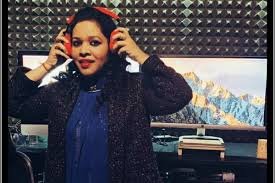
 Dr Sajida Khan is a Hyderabad-based audio engineer and music professional widely recognised as India’s first female music technician, with more than a decade of experience across film, broadcast, and digital media. Growing up in the Moula Ali suburb of Hyderabad, she developed an early passion for sound and performance, regularly participating in folk music competitions at Ravindra Bharathi and appearing on Doordarshan and All India Radio. What began as school-level participation in bands and folk ensembles gradually evolved into a serious engagement with the technical side of sound, setting her apart from peers who focused solely on singing or instruments.
After completing junior college, Sajida joined Geethanjali Studios in Hyderabad during the gap before starting formal higher studies, initially treating it as a temporary “hobby.” The studio environment proved transformative: she discovered a strong aptitude for critical listening and sound analysis, spending her first two years painstakingly identifying every instrument in multi-track recordings at a time when no automated tools existed for that purpose. This rigorous grounding in musical detail laid the foundation for her later work as a sound engineer, enabling her to understand both the artistic and technical dimensions of audio production.
Over the next several years, Sajida trained at multiple institutions to address the lack of structured audio-engineering education in India. She undertook courses covering recording, mixing, and post-production workflows and built parallel competence as a musician, learning Western music notation and studying with established teachers. This blended formation—combining hands-on studio practice with formal musical study—shaped her approach to sound as an integrated art and craft, rather than a purely technical service.
Professionally, Dr Sajida Khan has worked on more than 60 films in Telugu, Tamil, Malayalam, and Bhojpuri, in addition to a wide range of non-film audio projects. Her credits span original Telugu films such as Guri, Slokam, Wallposter, Keka, Andhrawala, Lava Kusa, and June 9, as well as dubbed versions of Tamil and Malayalam films into Telugu. In these projects, she has handled dubbing, dialogue replacement, sound effects, background score mixing, and complete audio mixes, often taking responsibility for multiple departments that are typically split among several technicians. Beyond cinema, she has engineered political and devotional music albums, jingles, television serials, documentaries, All India Radio recordings, radio serials, and award-show audio sequences.
A major milestone in her career was her work on the animation feature Lava Kusa, directed by Dhavala Satyam, produced simultaneously in Telugu and Hindi over nearly four years. Sajida describes dubbing for this project—managing bilingual voice tracks and complex post-production schedules—as a once-in-a-lifetime experience that tested and validated her abilities as a lead sound engineer. She has also collaborated with prominent directors such as Dasari Narayana Rao, Teja, and Puri Jagannadh, and contributed to multiple dubbed Bhojpuri films, strengthening her profile across regional industries.
In 2018, Sajida established her own studio, 6HTZ, in Banjara Hills, Hyderabad, which has since become the base for her independent practice. From this facility, she has increasingly focused on long-form audio storytelling—particularly audiobooks and literary recordings—where she integrates narration with carefully designed soundscapes. One flagship initiative involves working with around 40 students from a government school in Nagari, Andhra Pradesh, to record their poems from the anthology Tholi Mogulu and release the compilation as a freely accessible digital audio resource. This project reflects her commitment to using professional sound production to amplify young and often underrepresented voices.
Dr Sajida Khan’s path-breaking role has been formally recognised at the national level. In 2018, she received the “First Ladies” Award from President Ram Nath Kovind at Rashtrapati Bhavan, where she was honoured as India’s first female music technician alongside women achievers from other fields. This presidential recognition significantly raised her public profile and affirmed her pioneering position in a profession long dominated by men. She has also been conferred the Visishta Mahila Award by the Government of Telangana, which acknowledges her professional contributions and serves as a role model for women in the state.
In addition to national and state awards, Sajida’s work has attracted international attention in professional audio circles. She is featured in the global project Women in Audio, an “international audiobook” that collects interviews with women achievers in the sound field worldwide, where she appears as the only female music technician from India. Media profiles in outlets such as The News Minute, Humans of Hyderabad, and Deccan Chronicle present her as the “only female music technician in the country,” highlighting both her technical competence and her quiet, sustained challenge to gendered assumptions about studio work.
A significant part of Sajida’s public engagement centres on education and outreach. She frequently visits schools and colleges to speak about women’s education, health, and careers in sound, emphasising that passion for music can legitimately translate into a profession rather than remaining a private hobby. She also advocates for more structured, longer-duration audio-engineering programmes after school, arguing that sustained, practice-heavy training is crucial for building a serious career in post-production and sound design.
Her practice extends into cultural preservation, particularly in relation to folk and tribal music. Drawing from her own early involvement in folk competitions, she promotes the recording and archiving of traditional forms that risk being lost as older practitioners pass away and younger generations move away from these genres. By converting stories, songs, and poetry into richly produced audio, she seeks to create accessible, durable records of community knowledge that can circulate beyond the constraints of print or live performance.
Sajida has consistently stressed the centrality of sound to cinematic experience and insists that audio technicians deserve fuller recognition within production hierarchies and credit systems. While she reports that many colleagues have entrusted her with substantial responsibility and that she has not faced overt hostility, she is candid about ongoing structural barriers: limited institutional training options, minimal public understanding of audio work, and the very small number of women entering the field. Against this backdrop, her own trajectory—from a young woman informally exploring a studio during a college break to a presidential-award-winning audio engineer with her own facility—embodies the possibilities that arise when technical skill, musical sensitivity, and persistence intersect.