
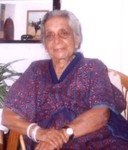
 Laeeq Futehally (1921–2014) was a formidable Indian writer, editor, and naturalist whose career bridged the worlds of literature and environmental conservation. Born into the illustrious Tyabji family of Bombay, she inherited a tradition of intellectual rigour and public service. Her lineage included prominent figures like Badruddin Tyabji and her uncle, the legendary “Birdman of India,” Sálim Ali, who profoundly influenced her ecological outlook. In 1943, Laeeq married Zafar Futehally, a distinguished naturalist and co-founder of WWF-India. Their union was a lifelong intellectual partnership dedicated to conservation. This commitment to the natural world extended to their children: their son, Murad, became a conservationist; their daughter, Zai (Zahida), co-founded the Madras Crocodile Bank with herpetologist Romulus Whitaker; and their daughter, Shama, was a noted novelist and translator.
Literary Contributions and Environmental Advocacy:
Laeeq played a pivotal role in shaping India’s post-Independence intellectual discourse as the Literary Editor of Quest. Working alongside poet Nissim Ezekiel, she maintained exacting standards for the journal, which championed independent Indian thought. Quest famously ceased publication in the mid-1970s rather than submit to government censorship during the Emergency. In 2011, she helped preserve this legacy by co-editing The Best of Quest, ensuring the journal’s contributions to Indian criticism remained accessible to new generations.
Futehally’s most enduring contribution was her ability to demystify natural history for the layperson. Collaborating with Sálim Ali, she co-authored Common Birds (1967) and About Indian Birds, seminal texts that introduced ornithology to Indian schools and households. Her solo works, such as This Earth of Ours (1991) and Our Environment, shifted the narrative of environmentalism from a niche scientific pursuit to a fundamental civic responsibility.
After moving to Bangalore, Laeeq became a prominent voice in urban ecology. Through her Deccan Herald column and her book Gardens, she reframed horticulture as an aesthetic and ecological practice—creating habitats rather than just manicured lawns. Her interests were remarkably broad; she was a founding member of the Bombay International School and, in the final year of her life, published The Last Englishman, a biography of the legendary educator Jack Gibson.
When Laeeq Futehally passed away in 2014 at age 92, she left behind a blueprint for the “engaged intellectual.” By weaving together literature, education, and conservation, she helped cultivate a modern Indian identity rooted in scientific awareness as well as literary excellence.