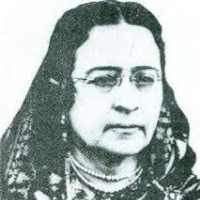
 Sughra Humayun Mirza (1884–1958) was a pioneering social reformer, prolific Urdu writer, and educational activist who carved out a new identity for Muslim women in early 20th-century Hyderabad. Celebrated as the region’s first female novelist, she wielded her pen as a powerful tool for change, challenging patriarchal norms and advocating for women’s empowerment through her extensive literary and organisational work.
Born into an educated, cosmopolitan family and married to a supportive, reform-minded barrister, Mirza channelled her personal experience of being denied a formal education into a lifelong crusade. Her activism was multifaceted, strategically blending literary production with on-the-ground institution building. As a writer, she was remarkably versatile, authoring 14 major novels, five travelogues, numerous essays, and poetry. Her novels, such as the notable Mohini (1929), ingeniously embedded radical ideas about women’s rights to divorce and remarriage within familiar spiritual and narrative traditions, making her progressive message accessible and palatable to a conservative readership.
Her most revolutionary literary intervention was as a journalist and editor. In 1919, she founded the Urdu monthly journal Al-Nisa (The Woman), a groundbreaking publication that created a “pardah-friendly” public sphere. For its secluded readers, the journal was a window to the world, bringing news, travel accounts, and reformist ideas directly into their homes. It also provided a platform for aspiring female writers, fostering a vibrant textual community that allowed women to participate in national discourses without physically transgressing the boundaries of purdah. Her later journal, Zaib-un-Nisa, adopted an even more explicitly political tone, connecting her readers to the activities of national bodies like the All India Women’s Conference.
Mirza’s most tangible legacy is the Madrasa-e-Safdaria, a school for girls she founded in 1934. Starting with just seven girls from local slums and donating her own property, she created an enduring institution that continues to provide Urdu-medium education to girls from low-income families. This school was the physical embodiment of her educational philosophy. Furthermore, she was a masterful organiser, establishing the Anjuman-e-Khawateen-e-Dakkan (Deccan Ladies’ Association) in 1919. This and similar associations served as crucial “third spaces” where women could meet, learn vocational skills, and develop organisational abilities in a safe, culturally acceptable environment, bridging the gap between the private home and public life.