
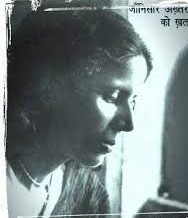
 Safia Jan Nisar Akhtar (1916–1953) was a pioneering Urdu writer, educator, and feminist intellectual whose contributions left a lasting mark despite her short life. Born Safia Siraj-ul-Haq into a progressive family in Uttar Pradesh, she received an education that was unconventional for Muslim girls of her time. Her father personally tutored her in English, Urdu, and Persian, and she went on to earn a master’s degree in education from Aligarh Muslim University, where she distinguished herself academically.
In 1943, she married the poet Jan Nisar Akhtar in a partnership that defied traditional norms; Safia herself initiated their courtship after his family delayed the marriage proposal. Their bond was one of intellectual equals. When Jan Nisar moved to Bombay in 1949 to become a film lyricist, Safia remained in Bhopal, working as a professor of Urdu at Hamidia University, to financially support their family and raise their two sons, Javed and Salman Akhtar. This period of separation and sacrifice became a central theme in her later literary work.
Safia’s most celebrated literary contributions are two volumes of letters written to her husband between 1943 and 1952, published posthumously in 1955 as Zer-e-Lab (Under the Lips) and Harf-e-Aashna (Familiar Words). These letters are renowned for their lyrical prose, blending romantic intimacy with profound intellectual discourse. They candidly explore themes of loneliness, sacrifice, and feminist resilience, revealing her as an equal partner in her marriage. Her critical essays, collected in Andaaz-e-Nazar (The Way of Seeing), also broke new ground in Urdu literary criticism, particularly her analysis of Ismat Chughtai’s work.
As one of India’s first Muslim women professors, Safia was a passionate advocate for girls’ education. She rejected the practice of purdah and championed economic independence and gender equality, embodying the ideal of a modern Muslim woman who successfully balanced career, marriage, and motherhood. Her life and work were deeply rooted in the Progressive Writers’ Movement, a circle that included prominent figures such as Faiz Ahmed Faiz.
Tragically, Safia was diagnosed with cancer in 1951 and died in 1953 at the age of 37. Her untimely death cut short a brilliant career, leaving a void in the literary world. Though she received no formal awards in her lifetime, her legacy endures. Her letters are considered seminal works in Urdu literature, celebrated for their emotional depth and stylistic innovation. She is recognised as a feminist icon who defied societal stereotypes, and her influence continues through her sons—the renowned poet and lyricist Javed Akhtar and the psychoanalyst Salman Akhtar. Safia’s life remains a powerful testament to the struggle and triumph of women seeking to reconcile tradition and modernity in post-colonial India.