
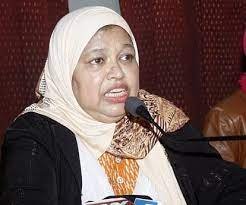
 Shaista Amber (b. early 1960s, Allahabad) is an influential Indian social reformer, best known as the founder and president of the All India Muslim Women’s Personal Law Board (AIMWPLB). For decades, she has championed the cause of Muslim women’s rights, seeking gender justice within the framework of Islamic principles and the Indian Constitution.
Born into a progressive family, her father was a railway guard and noted Urdu poet. Shaista Amber began writing at a young age and was briefly associated with the Communist Party of India, reflecting a secular and socially conscious upbringing. Her activism emerged from the lived realities of Muslim women who faced discrimination under male-dominated interpretations of personal law, especially in matters of marriage, divorce, and maintenance.
In 2005–06, disillusioned by the inaction of the patriarchal All India Muslim Personal Law Board, she established the AIMWPLB in Lucknow. Her organisation provided a platform for Muslim women to voice their concerns, particularly regarding triple talaq, halala, property rights, and maintenance. A year earlier, she had already made a groundbreaking move by founding Lucknow’s first women-only mosque, the Amber Mosque, promoting inclusivity and female participation in religious spaces.
One of her major contributions has been the drafting of a progressive Nikahnama (marriage contract) in 2008. This document allowed for stipulations protecting women’s rights within marriage, including the right to initiate divorce, clauses against marital cruelty, and financial safeguards. She also spearheaded the establishment of women-led Sharia courts to address family disputes, offering an alternative to male-dominated religious forums.
Amber has been a vocal critic of exploitative practices such as instant triple talaq and nikah halala, calling for a Muslim Marriage Act similar to the Hindu Marriage Act. She argued for a codified legal framework that guarantees women their rights without contradicting Islamic principles.
Her activism extends to waqf reform, where she has called for the proper use of Islamic charitable endowments for the benefit of divorced women, widows, orphans, and the poor. She proposed building shelters, skill training centres, and providing maintenance using waqf resources—highlighting both legal and socio-economic justice.
Shaista Amber has engaged with political leaders to raise issues of women’s welfare and institutional reforms. In 2025, she endorsed the Waqf (Amendment) Bill, viewing it as a necessary step toward accountability and gender justice.
Through her work, Amber has demonstrated how Islamic values can coexist with constitutional ideals of gender equality. Her leadership has created tangible alternatives for Muslim women seeking justice, making her a leading voice for reform within India’s pluralistic legal system.