
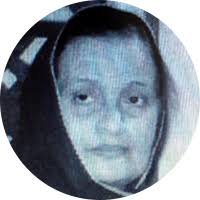
 Fatima Taj (1948–2020) was a distinguished voice in modern Deccani Urdu literature. Over a prolific thirty-year career, she skillfully blended the structural elegance of classical Urdu poetry with a distinctly modern and feminine perspective. Her extensive body of work includes poetry, short stories, satirical essays, and a novella, culminating in over a dozen published books and numerous literary accolades across India.
Born in Hyderabad, Deccan, Taj’s literary sensibilities were shaped by the rich cultural and linguistic environment of her city. Immersed in the Dakhni idiom and the classical Urdu canon from a young age, she began writing poetry under the mentorship of Dr. Mohammad Abdul Ghaffar Khan. Though her ancestry traced back to the Hijaz, her identity as a writer was thoroughly Hyderabadi. She was a vital member of the city’s literary scene, particularly within women’s circles, such as Mahfil-e-Khawateen, where she actively mentored emerging writers.
Taj’s literary journey began in the early 1990s, and she quickly became a regular contributor to Urdu publications in India and internationally. Her work gained significant academic recognition during her lifetime when a scholar, Dr. Tasneem Sultana, dedicated an M.Phil. thesis to her oeuvre—a rare honour for a living female Urdu writer at the time.
Her bibliography showcases her versatility. She published six major poetry collections, including her debut Ab Ke Baras (1992) and the award-winning Phool Ghazal Ke (1998) and Chāndnī kā Āʾina (2010). Her prose works were equally celebrated; the short story collection Aas Pās (1993) and the satirical volume Man Mānī (2005) both received major awards. She also experimented with form in her novella Woh (1995) and addressed social issues through essays and sketches in works like Amanat (1993).
Critics have lauded Taj’s distinctive style, which combined formal poetic meters with a remarkable spontaneity. Her poetry is noted for its exploration of feminine interiority, delving into themes of loss, longing, and quiet protest. While paying homage to classical traditions through complex rhyme schemes, she incorporated a lilting Deccani diction that made her work accessible and fresh. Beyond her poetry, her satirical writings sharply critiqued societal double standards and communal divisions with wit and insight.
Her contributions were widely recognised with more than ten major awards, including prizes from the Uttar Pradesh and Andhra Pradesh Urdu Academies, the Indira Gandhi International Award, and the “Imtiyāz-e-Mir” Award.
Fatima Taj’s legacy is that of a pivotal figure who bridged the classical and modern eras in Hyderabadi literature. She championed the female voice in a traditionally male-dominated field, creating a body of work that continues to be celebrated. Her inclusion in university syllabi and the enduring recitation of her ghazals in literary gatherings affirm her secure place among the great writers of the Deccan.