
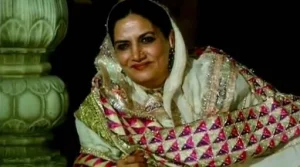
 Shaukat Kaifi Azmi was a distinguished Indian theatre and film actress, writer, and social activist whose life embodied the fusion of art and ideology. A key figure in India’s progressive cultural movement, she left a lasting legacy through her powerful performances and unwavering commitment to social change alongside her husband, the renowned poet Kaifi Azmi.
Born into a comfortable, upper-class family in Hyderabad State, Azmi’s life took a transformative turn in 1947 when she met Kaifi Azmi at a Progressive Writers’ Conference. Captivated by his poetry and personality, she embarked on a passionate courtship that culminated in a bold decision to leave her privileged background. She married the communist poet and moved to Mumbai to live in a commune, embracing a life of financial hardship and ideological conviction. This choice defined her journey, placing her at the heart of the cultural wing of the Communist Party of India.
In Mumbai, Azmi became a cornerstone of the Indian People’s Theatre Association (IPTA), where her career as an actress flourished. Driven by both artistic passion and the financial needs of her family, she performed in several notable plays, establishing herself as a formidable talent. Her work with IPTA was central to her identity, enabling her to utilise her craft as a means of social commentary.
Her stage success transitioned to a significant, though not extensive, film career marked by memorable roles. She made her debut in Chetan Anand’s Haqeeqat (1964) but gained widespread acclaim for her performance as Balraj Sahni’s supportive wife in M.S. Sathyu’s seminal Partition film, Garm Hava (1974). However, her most iconic role came in Muzaffar Ali’s Umrao Jaan (1981), where she masterfully portrayed Khanum Jaan, the brothel owner. Her performance was praised for its regal bearing and complex authority, a role that her acclaimed actress-daughter, Shabana Azmi, would later find difficult to match. Her commanding screen presence was also evident in films like Bazaar (1982) and Mira Nair’s Salaam Bombay! (1988).
Beyond her public persona, Azmi was the matriarch of a celebrated artistic family, raising two accomplished children, actress Shabana Azmi and cinematographer Baba Azmi, in an environment rich with progressive values. She chronicled her remarkable life in her memoir, Yaad Ki Rahguzar, later translated into English as Kaifi & I. The book offers an intimate account of her romance, her struggles in the commune, and her fifty-five-year partnership with Kaifi. The memoir was later adapted into a successful theatrical production, “Kaifi Aur Main,” ensuring their story continued to inspire new generations.
Shaukat Azmi’s legacy is that of an artist who lived her principles. She was a feminist pioneer who balanced career and family in an egalitarian partnership, and a lifelong activist committed to using culture for social transformation. Her life and work remain an inspiring testament to the power of art when guided by unwavering conviction and purpose.