
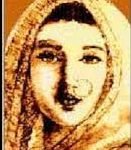
 In the history of India’s First War of Independence, few stories are as compelling—yet consistently overlooked—as that of Azizun Nisa, known professionally as Azizan Bai. A tawaif (courtesan) based in Kanpur, she abandoned the passive role assigned to her by society to become a spy, combatant, and organiser in the 1857 uprising. Though she paid for her defiance with her life, her legacy survives through eyewitness testimonies and colonial memoirs, marking her as a central, if marginalised, figure of the rebellion.
From Cultural Icon to Revolutionary Leader
Historical accounts of Azizun’s origins vary, with some records suggesting she was born Anjula in 1824 to a Hindu jagirdar in the Malwa region, while others identify Lucknow as her birthplace. Regardless of her origins, she was trained in the cultural heart of Nawabi India under Umrao Jaan Begum. Highly educated in Urdu and Persian literature, she was a master of classical poetry and arts. However, the British annexation of Awadh in 1856 dismantled the royal patronage that sustained the courtesan tradition, reclassifying these highly educated women as common social outcasts. For Azizun, the 1857 rebellion was both a patriotic struggle and a defence of her cultural world.
In Kanpur, Azizun’s residence became a clandestine nerve centre for the insurgency. Her close relationship with the sepoy Shamsuddin Sawar drew her into a rebel intelligence network that included leaders like Nana Saheb and Tantya Tope. Her contributions were multifaceted: she gathered military intelligence from British officers who frequented her salon and passed it to rebel commanders. Most notably, she organised the “Mastani Toli,” a women’s unit that disguised themselves as men to collect information, nurse the wounded, and distribute arms.
Combat and Martyrdom
Azizun’s leadership extended to the front lines. During the Siege of Cawnpore (Kanpur), eyewitnesses reported seeing her dressed in male attire and armed with pistols, riding on horseback to rally rebel forces. She even maintained a weapons depot and reportedly manned a gun battery firing on British positions. Her commitment was sealed through symbolic rituals; she offered soldiers bread (roti) or a lotus (kamal), where acceptance signalled a vow to join the uprising.
When British forces recaptured Kanpur in July 1857, Azizun was identified as a primary conspirator. Brought before General Henry Havelock, she was offered a pardon and wealth in exchange for the names of her associates. She famously retorted: “If you want to give anything, give us freedom.” She was executed by firing squad, her final cry of “Nana Sahib ki Jai” echoing her unwavering loyalty.
Despite her pivotal role, Azizun Nisa was long excluded from mainstream nationalist history—a silence reflecting the social erasure of the tawaif community. However, modern scholarship and creative works, such as Tripurari Sharma’s plays, have begun to reclaim her story. Azizun Nisa remains a powerful reminder that those at the margins of society were often at the very heart of the struggle for independence.