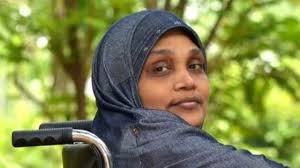
 K. V. Rabiya (1966–2025) was a social worker and activist from Malappuram, Kerala, whose life was a testament to extraordinary resilience and unwavering commitment to social upliftment. Despite being afflicted by a debilitating physical disability and other health crises, she became a powerful force for change, particularly in the areas of literacy and women’s empowerment. Her journey from a village with no proper road to becoming a national icon is a source of inspiration for many.
Born on February 25, 1966, in the small village of Vellilakkadu to Kariveppil Moosakutty Haji and Allipara Biyyachutty Hajjumma, Rabiya came from a poor Mappila family. Her life took a tragic turn at the age of 14 when she was struck by polio, which led to the paralysis of her legs and confined her to a wheelchair. Just as she was overcoming this challenge, she was diagnosed with breast cancer at age 32. In 2004, another tragic incident left her with a spinal injury, forcing her to be bedridden for the last 25 years of her life. Despite these immense personal battles, her spirit remained unbroken.
A unique and often unspoken aspect of her personal life was her marriage. Rabiya married her cousin brother, a marriage in which she became his second wife. In a 2012 interview, she candidly defended her decision and expressed her views on the practice of polygamy in Islam, stating that it was not a sin and should not be a cause for societal shame.
Rabiya’s most significant contribution began in 1990 when she launched a literacy campaign in her neighbourhood, which had been overlooked in the state’s literacy drives. Sitting in her wheelchair, she mobilised volunteers and went door-to-door, successfully enrolling thousands of illiterate people, especially women, into her classes. Her efforts led to the successful implementation of literacy programs in over 1,500 wards of the Malappuram district. She became a mascot for the Kerala State Literacy Mission and was recognised for her instrumental role in Malappuram becoming the first e-literate district in India through the Akshaya project.
In 1994, she founded ‘Chalanam’ (meaning ‘motion’ or ‘movement’), a self-funded organisation that became the vehicle for her social work. Through ‘Chalanam’, she initiated a wide range of programs:
- Women’s Empowerment: She established self-help groups for women, offering vocational training in skills like tailoring and umbrella making, helping them achieve financial independence.
- Education and Healthcare: ‘Chalanam’ ran schools for intellectually and physically challenged children and conducted awareness campaigns on health, sanitation, and hygiene.
- Community Development: Her tireless advocacy led to the construction of a road and the provision of electricity and clean drinking water to her remote village. She also championed the fight against social evils like dowry, alcoholism, and communalism.
Rabiya’s inspiring life and work earned her numerous prestigious awards and accolades, both national and international. Some of her most notable honours include:
- Padma Shri (2022), India’s fourth-highest civilian award.
- National Youth Award (1994) from the Government of India.
- Kannagi Sthree Sakthi Puraskar (1999) from the Government of India.
- Joseph Mundassery Award (2010), recognising her contributions to education.
She also received a United Nations Development Programme (UNDP) award in 2000 for her remarkable community-level efforts. A documentary film titled “Rabiya’s Story” was made on her life, further amplifying her message of hope and perseverance. She passed away on May 4, 2025, leaving behind a legacy of resilience and selflessness that continues to inspire.