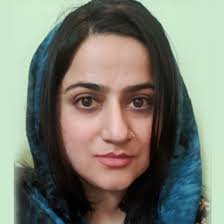
 Asiya Zahoor is a distinguished Kashmiri poet, filmmaker, and scholar from Baramulla, renowned for her multifaceted contributions to literature, cinema, and academic research. A former Sanford H. Taylor Post-doctoral Fellow at Cornell University, she has emerged as a significant contemporary voice in South Asian intellectual and creative circles.
Zahoor’s academic path is marked by interdisciplinary excellence. After her undergraduate studies in Baramulla, she earned a Master’s and MPhil in Diasporic Literature from Kashmir University. Her scholarly pursuits gained an international dimension when she received a Ford Foundation International Fellowship in 2007, which enabled her to study Applied Linguistics and Psycholinguistics at Oxford University. She further broadened her expertise by studying Caribbean literature at the University of Kashmir and Kashmiri Literature at Jamia Millia Islamia in New Delhi.
Her upbringing in an education-focused family profoundly shaped her worldview. Her father, an Urdu teacher, and her mother, who worked in social welfare and ran an orphanage from a family-owned building, instilled in her a love for storytelling through Kashmiri folklore. This environment fostered her literary sensibilities and a deep-seated commitment to accessible education, born from her early observations of educational disparities.
Zahoor’s creative and scholarly output is both prolific and impactful.
-
Poetry: Her debut poetry collection, “Serpents Under My Veil” (2019), has been critically acclaimed for its powerful treatment of themes like conflict, identity, and life in Kashmir. Critics praise her skilful fusion of Greek mythology with Kashmiri folk tales. Poems such as “Medusa in Burkha” and “The Lightness of Being in a Heavily Militarised Zone” offer poignant reflections on the contemporary Kashmiri experience. Her work has been translated into several languages, including Arabic, French, and Persian.
-
Filmmaking: Her short film “The Stitch” (2018) is a notable cinematic achievement, winning the Critics Award at the 2nd South Asian Film Festival. Set near the Line of Control (LoC), the film follows a young girl who uses drawing as a form of solace amidst the challenges of curfews and crossfire. In a powerful artistic statement against the inadequacy of language to convey trauma, the film contains no dialogue. It has been screened at several prestigious international festivals.
-
Academic Writing: Her research spans psycholinguistics, literary criticism, and women’s studies. She has authored the book “Language and Migration: Investigating Psycholinguistic Processes” and published scholarly articles on topics ranging from the mental representation of words to the works of authors like Derek Walcott and Agha Shahid Ali.
Perhaps Zahoor’s most significant contribution is Bolbosh (www.bolbosh.net), a pioneering digital humanities project. The name, meaning endearing communication, reflects its mission: to create a comprehensive digital archive of the languages and literature of Jammu and Kashmir. The platform documents 12 regional languages and dialects, including Kashmiri, Dogri, Ladakhi, and the endangered Shina. It features an online Kashmiri dictionary, interviews with writers, and a rich collection of prose, idioms, and stories, making a crucial contribution to the preservation of the region’s linguistic diversity.
As a scholar, educator, and artist, Asiya Zahoor bridges academic rigour with creative expression. Through her poetry, film, and digital archival work, she provides an authentic Kashmiri perspective on complex realities, countering mainstream narratives. Her efforts not only enrich contemporary South Asian literature but also ensure that the unique cultural and linguistic heritage of her homeland is preserved for future generations.