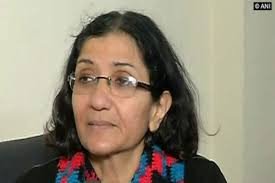
 Zakia Soman is a leading Indian activist for Muslim women’s rights, renowned for co-founding the Bharatiya Muslim Mahila Andolan (BMMA) and spearheading landmark legal reforms. Her work has been pivotal in challenging patriarchal structures within her community while advocating for the constitutional rights of Muslim women.
Born in Ahmedabad, Gujarat, to an educated, middle-class Muslim family, Zakia’s worldview was shaped by a liberal, secular upbringing. Her mother was a high school teacher and her father a college principal, an environment that fostered her academic pursuits, culminating in an M.Phil. in English Literature. Before her full-time activism, she was a university professor. A defining factor in her journey was her family’s multi-generational trauma from communal violence, including attacks on her grandmother’s and parents’ homes. This personal history, combined with the harrowing experience of the 2002 Gujarat riots, catalysed her transformation from a “genteel working woman to an ardent activist.” The terror of the riots propelled her into relief work, where she was confronted with the immense suffering of Muslim women, solidifying her resolve to fight for their rights. She is married to Soman Nambiar, and their son, Arastu Zakia, is a filmmaker.
In January 2007, Zakia Soman co-founded the Bharatiya Muslim Mahila Andolan (BMMA) with Dr. Noorjehan Safia Niaz. What began as a meeting of 500 women has blossomed into a mass organisation with over 100,000 members across 15 states. The BMMA’s core mission is to secure equal citizenship and gender justice for Muslim women by asserting their rights as guaranteed by both the Indian Constitution and the Quran.
Two of her most significant victories include:
- Triple Talaq Ban: Zakia was a primary petitioner in the historic Supreme Court case that declared instant triple talaq unconstitutional in August 2017. Her advocacy was bolstered by extensive research, including a survey of over 5,000 Muslim women, which found that an overwhelming 92.1% supported the abolition of the practice.
- Haji Ali Dargah Entry: In 2016, the BMMA won a landmark case in the Bombay High Court, securing women’s right to enter the inner sanctum of the famous Haji Ali Dargah in Mumbai, challenging patriarchal interpretations of religious tradition.
As a prolific writer and researcher, Zakia has co-authored several influential books and studies. These publications document the struggles of Muslim women and advocate for legal reform, covering topics like polygamy, personal law, and the history of the women’s movement. A 2022 study she co-authored revealed that 84% of women in polygamous marriages wanted the practice banned.
Her work has earned her numerous accolades, including the Outstanding Women Achiever’s Award from the National Commission for Women (2014) and a place on the BBC’s 100 Fearless Women list in 2015.
Zakia continues to advocate for the codification of a reformed Muslim Personal Law, fighting against polygamy and campaigning for women’s maintenance rights. Her activism is rooted in a dual philosophy: seeking gender justice through progressive, women-centric interpretations of the Quran while simultaneously demanding the full protection of constitutional law. Despite facing opposition from conservative factions, Zakia Soman has irrevocably transformed the landscape of women’s rights in India, building a powerful, collective movement that champions a future where Muslim women do not have to choose between their faith and their fundamental rights.