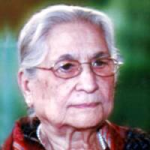
 Razia Halim Jang was a distinguished Urdu poetess from Hyderabad who made significant contributions to Urdu literature. Born in 1922 into an affluent family in Hyderabad Deccan, she received her early education at St. Mary’s Convent in Allahabad, which provided a strong foundation for her later literary pursuits. She married Nawab Halim Jung of Delhi, connecting the nobility of Hyderabad and Delhi. The couple had four sons, one of whom was Najeeb Jung, who became the Vice-Chancellor of Jamia Millia Islamia and later the Lieutenant Governor of Delhi.
A pivotal moment in her literary journey was a pilgrimage to Makkah, which became the catalyst for her serious engagement with poetry, particularly religious writing. This spiritual experience deepened her creative expression and devotion to Urdu literature.
Razia Halim Jang’s notable works are “Main Ghareeb Aur Tu Ghareeb Nawaz” and “Sadae-e-Dil”. The first is a collection of Hamd (hymns in praise of Allah) and Naat (poems in praise of Prophet Muhammad), reflecting her profound spiritual devotion. The second, “Sadae-e-Dil” (Voice of the Heart), is a collection of ghazals, showcasing her mastery of classical Urdu poetic form. Her poetry also included nazms (free-verse poetry) and sad poetry, demonstrating her versatility across various genres and her ability to capture a wide range of human emotions and spiritual experiences.
Her literary works received formal recognition when they were officially released at Edward Said Hall at Jamia Millia Islamia on March 15, 2012. This event at a premier Indian university highlighted the academic and literary significance of her contributions. Her works continue to be featured on major Urdu literary platforms, and her poetry is described as being “famous among poetry lovers”, demonstrating its enduring appeal.
The literary tradition she established continued through her family; her son Najeeb Jung not only achieved distinction in public service but also contributed to literature by translating Ghalib’s poetry into English. Razia Halim Jang represents an important voice for women in Urdu literature from Hyderabad’s aristocratic circles. Her work bridges classical Urdu traditions with personal spiritual expression, particularly through her religious poetry.