
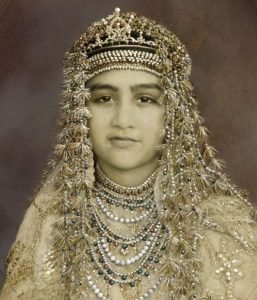
 Her Highness Suraiya Jah, Nawab Gowhar-i-Taj, Abida Sultan Begum Sahiba (1913–2002) was a towering figure of South Asian royalty, the eldest daughter and heir apparent of Nawab Hamidullah Khan, the last ruling Nawab of Bhopal. A woman of fierce independence and remarkable talent, she defied the conventions of her time, leaving an indelible mark as an administrator, sportswoman, diplomat, and author. Her life, chronicled in her acclaimed book, Memoirs of a Rebel Princess, offers a unique and candid perspective on the decline of princely India, the trauma of Partition, and the forging of a new identity.
Born on August 28, 1913, Abida Sultan was raised in the unique matriarchal tradition of Bhopal, a state ruled by a succession of powerful Begums for over a century. Under the tutelage of her formidable grandmother, Begum Sultan Jahan, she received a rigorous education in statecraft, Islamic studies, and Persian, alongside more unconventional pursuits. Rejecting the confines of the purdah (the practice of secluding women), she became a skilled pilot by the age of 18, an avid hunter, and a national-level sports champion, holding the All-India women’s squash title for three consecutive years. Her father groomed her for leadership, appointing her Chief Secretary and later President of the Cabinet, effectively preparing her to rule.
However, the tumultuous events of 1947 changed the course of her life. A staunch believer in the two-nation theory and deeply disillusioned by the violence of Partition, she made the momentous decision to migrate to the newly created nation of Pakistan in 1950. In doing so, she relinquished her right to the throne of Bhopal, which eventually passed to her younger sister, Sajida Sultan. This move, driven by both political conviction and personal reasons, including a rift with her father over his second marriage, marked a profound break from her past.
In Pakistan, Abida Sultan embraced her new life with characteristic vigour. Settling in Karachi, she became a respected figure in public life. She briefly served as Pakistan’s Ambassador to Brazil and became a vocal supporter of Fatima Jinnah’s presidential campaign against the military ruler Ayub Khan in 1965. A committed democrat, she used her pen to advocate for human rights and critique political injustices in the Pakistani press.
Her most enduring legacy is her memoir, published in 2004, two years after her death. The book is a frank and invaluable account of a lost era, detailing the intricate politics of the princely states, the lavish lifestyles, the complex negotiations during the transfer of power, and her personal journey of self-fashioning. Her candid portrayal of historical figures such as Muhammad Ali Jinnah and Mahatma Gandhi provides a rare, personal insight into a pivotal period in the subcontinent’s history.
Abida Sultan passed away in Karachi on May 11, 2002. She is remembered not just as a princess who gave up her throne, but as a woman of principle and courage who forged her own destiny. Her son, Shahryar Khan, went on to have a distinguished career as Pakistan’s Foreign Secretary and Chairman of the Pakistan Cricket Board. Through her life and writings, Abida Sultan remains a symbol of resilience and a powerful voice from a bygone world.