
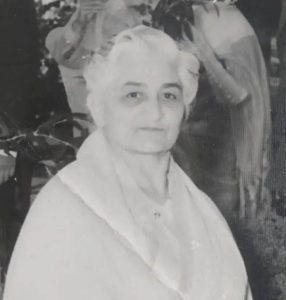
 Begum Maimoona Sultan (1900-1982) was a prominent figure of the Bhopal royal family, remembered as the consort of Nawab Hamidullah Khan, the last ruling Nawab of the princely state. Belonging to an illustrious lineage and possessing literary talent, she embodied the traditions of a dynasty remarkable for producing a succession of strong female rulers who left an enduring mark on Indian history.
Born in 1900, Maimoona Sultan was of distinguished Afghan descent, being the great-great-granddaughter of Shah Shuja Durrani, the former King of Afghanistan. In September 1905, she married Hamidullah Khan, then heir to the Bhopal throne, who succeeded his mother, Sultan Jahan Begum, in 1926. As the Begum of Bhopal, she held a position of high social standing and participated in the court’s ceremonial and cultural life. She and Nawab Hamidullah Khan had three daughters—Abida, Sajida, and Rabia Sultan—who in different ways would carry forward the family’s legacy into a changing political era.
Within the vibrant social milieu of the Bhopal court, Maimoona Sultan was active in cultural and charitable circles. Her membership of the Princess of Wales’s Ladies Club exemplified her engagement with social activities befitting women of her rank, and her life reflected the balance between tradition and adaptation that characterised the aristocracy of princely India.
Maimoona Sultan holds a unique place in South Asian literary history as the author of a rare early travelogue by a Muslim woman. Her book, A Trip to Europe, was published under the name Shahbano Begum when she was still a teenager. It recounts her 1911 journey to England with her mother-in-law, Sultan Jahan Begum, to attend the coronation of King George V.
Although restricted by purdah, which prevented her from direct participation in public events, her writing demonstrates keen observation and a reflective mind. She often drew on accounts from her mother-in-law and contemporary press reports, yet her narrative retains an individual voice. Written in a style influenced by formal Victorian prose, the travelogue comments on religious practices in Turkey, the value of women’s education, and the marvels of Western progress. In doing so, it provides a rare and important perspective on the encounter between Indian Muslim aristocracy and the West in the early 20th century.
Maimoona Sultan lived through one of the most turbulent transitions in Indian history. Her husband, Nawab Hamidullah Khan, was deeply involved in the political negotiations that followed independence in 1947. After initial hesitation, he signed the Instrument of Accession in 1949, merging Bhopal with the Dominion of India and bringing to a close the state’s era of autonomy.
The succession to the Bhopal title after Hamidullah Khan’s death in 1960 reflected these shifting times. Their eldest daughter, Abida Sultan, had migrated to Pakistan in 1950 and thereby forfeited her right to succession. The titular role passed to their second daughter, Sajida Sultan, who, through her marriage to Nawab Iftikhar Ali Khan Pataudi, linked the Bhopal dynasty with the princely house of Pataudi. This lineage continued through their son, Mansoor Ali Khan Pataudi, India’s celebrated cricket captain, and into the next generation of cultural prominence with actors Saif Ali Khan and Soha Ali Khan.
After Bhopal’s integration into India, Begum Maimoona Sultan continued to live in the city, maintaining her stature as the matriarch of her family and a custodian of its traditions. She passed away in 1982 and was laid to rest at the Bada Bagh cemetery in Bhopal. Her life represents both continuity and change: the heritage of a princely court, the voice of an early Muslim woman writer, and the enduring cultural influence of a family whose legacy continues to resonate in modern India.