
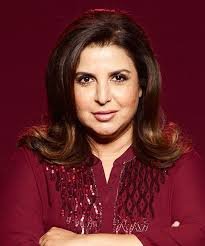
 Farah Khan is a pioneering figure in contemporary Hindi cinema, celebrated for her transformative contributions as both a choreographer and a director. Her career represents a remarkable journey of artistic innovation and commercial success, rising from a background of severe financial hardship to become one of Bollywood’s most influential personalities. Her work has not only redefined song-and-dance sequences but has also broken barriers for female filmmakers in a male-dominated industry.
Born into a family with film industry connections, Khan’s early life was marked by adversity. The financial collapse of her father’s film venture plunged her family into debt, forcing them from a comfortable life into poverty. This experience of hardship at a young age instilled in her a profound sense of resilience and a formidable work ethic that would define her career. Inspired by Michael Jackson’s “Thriller,” the self-taught dancer broke into the industry serendipitously, taking over choreography for the film Jo Jeeta Wohi Sikandar (1992). Her work on the song “Pehla Nasha” introduced a fresh, modern aesthetic to film choreography, blending Western influences with Indian sensibilities and establishing her unique style.
Throughout the 1990s and 2000s, Khan cemented her reputation with a philosophy that treated dance as an integral part of storytelling. Her choreography for iconic songs like “Chaiyya Chaiyya,” famously staged on a moving train for Dil Se (1998), became her global calling card. Her innovative work earned her numerous accolades, including a record seven Filmfare Awards and a National Film Award for Best Choreography. Khan’s influence extended internationally with projects like Monsoon Wedding and Andrew Lloyd Webber’s musical Bombay Dreams. For her work on the latter’s Broadway production, she received a Tony Award nomination for Best Choreography, a historic first for an Indian.
Khan seamlessly transitioned to directing, making her debut with the blockbuster Main Hoon Na (2004), for which she became the first woman to receive a Filmfare nomination for Best Director. Her second film, Om Shanti Om (2007), was a cultural and commercial phenomenon, becoming the highest-grossing Hindi film of its time. The film was a meta-cinematic tribute to Bollywood, showcasing her ability to create large-scale, nostalgic, and entertaining cinema that resonated with both domestic and global audiences. Her subsequent films, including Happy New Year (2014), further solidified her status as a director capable of helming massive productions.
Beyond film, Khan has built a successful career in television as a charismatic judge and host on popular reality shows like Indian Idol and Bigg Boss. She has also ventured into business with a production house and a fine jewellery line. Her personal life, including her marriage to Shirish Kunder and her candidness about having triplets via IVF, has further endeared her to the public. Farah Khan’s legacy is that of a multifaceted artist who reshaped Hindi cinema’s visual language, championed commercial and artistic success on her own terms, and continues to be a dominant force in Indian entertainment.