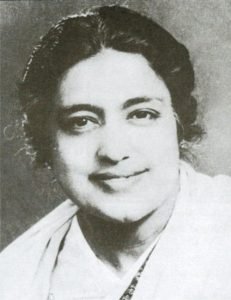
 Fathema Ismail (1903–1987) was a pioneering social architect and pragmatic activist who built India’s foundational infrastructure for polio rehabilitation and disability rights. Born into a family deeply involved in the nationalist movement—her brothers, Umar and Usman Sobhani, were major financiers of the Indian National Congress—Fathema was immersed in the ideals of social justice from a young age. Her early life was marked by her active participation in the freedom struggle, including sheltering revolutionaries such as Jayaprakash Narayan.
Her commitment to social reform was formalised through her work as Secretary of the Shimla branch of the All India Women’s Conference (AIWC) in 1936 and as a founder member of the All India Village Industries Association (AIVIA), reflecting her dedication to women’s emancipation and Gandhian principles of self-reliance. Though she had to abandon her medical studies in Vienna, the three years of training provided a crucial scientific foundation for her later work.
The turning point in her life came when her young daughter, Usha, was diagnosed with poliomyelitis in the 1940s. Confronted with a lack of adequate medical facilities and what she saw as an indifferent medical establishment, Fathema embarked on a relentless quest for treatment. This journey led her to learn rehabilitative techniques firsthand and galvanised her resolve to help others.
In 1947, she established her first clinic, the Physiotherapy and Rehabilitation Centre for Infantile Paralysis, which evolved into the Society for Rehabilitation of Crippled Children (SRCC). Her vision culminated in the founding of India’s first Children’s Orthopaedic Hospital in 1953, for which she strategically lobbied Prime Minister Jawaharlal Nehru for land near the Haji Ali racecourse in Mumbai to ensure the cause remained visible to the city’s elite.
Fathema’s genius lay in her holistic approach, which extended beyond medical treatment to ensure lifelong empowerment. She understood that true rehabilitation required education and economic independence. To this end, she founded the Society for the Education of the Challenged (SEC) in 1958 to provide education for children with disabilities and the Fellowship of the Physically Handicapped (FPH) to offer vocational training and secure employment opportunities. Together, these institutions formed a comprehensive ecosystem of care, a pipeline from medical crisis to a life of dignity and productivity.
In recognition of her monumental contributions, she was awarded the Padma Shri in 1958 and served as a nominated member of the Rajya Sabha from 1978 to 1984. Fathema Ismail passed away in 1987, leaving a legacy etched not in publications, but in the lives of the countless individuals empowered by the institutions she built, laying the groundwork for India’s eventual victory over polio.