
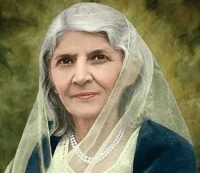
 Fatima Jinnah was a trained dental surgeon, stateswoman, and activist, whose life was inextricably linked to the struggle for India’s independence and the early years of the formation of a new nation after the Partition.
Born on July 31, 1893, in Karachi in undivided India, Fatima Jinnah was the youngest of seven children and the closest sibling to Muhammad Ali Jinnah, the founder of Pakistan. She was a pioneering figure in her own right, earning a degree from Dr. R. Ahmed Dental College in Calcutta in 1923, making her the first female dentist in undivided India. She practised in Bombay until 1929, when she closed her clinic to become the companion and confidante to her widowed brother, a role she would maintain for the rest of his life. Their bond was deep, and she lived with him, managing his household and providing crucial emotional and intellectual support.
Fatima Jinnah’s political activism began in earnest alongside her brother. She became a member of the Working Committee of the Bombay Provincial Muslim League and was a permanent member of the All-India Muslim League Council. She was a central figure in mobilising Muslim women, encouraging them to participate in the political struggle. She led the women’s wing of the Muslim League and was instrumental in organising rallies and political meetings, often speaking alongside her brother. Her efforts were pivotal in demonstrating the widespread support for the Muslim League’s demand for a separate homeland. She played a significant role in the Pakistan Movement, advocating for the rights and political empowerment of Muslim women.
After the creation of Pakistan in 1947, Fatima Jinnah’s role shifted from independence activist to national leader. She was a co-founder of the All Pakistan Women’s Association (APWA) and dedicated herself to the resettlement of Muslim refugees, establishing the Women’s Relief Committee to provide aid and support. She was widely known as Māder-e-Millat (Mother of the Nation) in Pakistan.
Her most significant political act in post-partition Pakistan was her courageous decision to challenge the authoritarian rule of President Ayub Khan in the 1965 presidential election. Despite her advanced age, she stood as the candidate for the Combined Opposition Parties (COP) with the slogan, “Democracy or Dictatorship.” Her campaign resonated with the public, drawing massive crowds and earning her overwhelming support in both East and West Pakistan. While she officially lost the election amid widespread allegations of rigging and electoral fraud, her campaign is remembered as a pivotal moment in Pakistan’s democratic history.
Fatima Jinnah passed away on July 9, 1967, under suspicious circumstances.