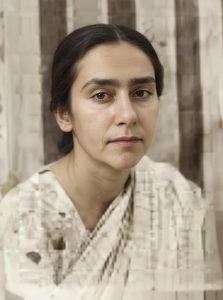
 Hajrah Begum (1910–2003) was a trailblazing Muslim woman in 20th-century India, renowned for her pivotal roles in the communist movement, women’s rights advocacy, and social reform. Born on December 22, 1910, in Rampur, Uttar Pradesh, she hailed from a progressive Sunni Muslim Pathan family of Rohilla descent. Her ancestors included notable figures such as Rohilla Chief Hafiz Khan, and her father served as a magistrate and tahsildar in Saharanpur and Meerut, underscoring the family’s elite ashraf status and involvement in colonial administration. She was the sister of the celebrated actress and dancer Zohra Sehgal.
Hajrah’s personal life included a first marriage to a cousin, which ended in divorce and produced a son, followed by a second marriage to communist leader Z.A. Ahmed, with whom she had a daughter, Salima Raza, an Urdu theatre director. Her granddaughter, Ayesha Raza Mishra, later became an actress.
Her educational journey began in a purdah school, progressing to Queen Mary’s College in Lahore, an English-medium institution that maintained purdah norms. Influenced by the nationalist non-cooperation movement and efforts to restore the Caliphate, she pursued advanced studies abroad in 1933, completing a Montessori teaching course and a nursing degree in London. This period exposed her to Marxist ideologies through the Indian Students Committee and anticolonial groups.
Hajrah Begum’s political contributions were profound. Joining the Communist Party of Great Britain in 1933, she became one of the earliest Indian members. A 1935 visit to the Soviet Union solidified her Marxist convictions, despite her observations of material challenges. Returning to India, she became a full-time cadre of the Communist Party of India (CPI), active in the Congress Socialist Party in Allahabad. She organised workers, including railway coolies, press employees, peasants, and industrial labourers such as Julahas in Azamgarh and tannery workers in Kanpur. As a rare female CPI member, she endured imprisonment in Lucknow Jail in 1949 and operated underground from 1948 to 1951. Internationally, she participated in events like the World Peace Conference in Vienna (1952), the Women’s International Democratic Federation conference in Copenhagen (1953), and the Afro-Asian Women’s Conference in Cairo (1961), advancing anti-imperialist causes.
In education, she supported adult literacy initiatives via the All India Women’s Conference (AIWC) and advocated for expanded access, particularly for rural and working-class women, drawing on her Montessori expertise to promote skill-building and critique elitist educational barriers.
Her work in women’s emancipation was foundational. As AIWC’s organising secretary from 1940, she edited its Hindi-Urdu magazine Roshni until 1946, when she departed due to its perceived elitism. She founded the National Federation of Indian Women (NFIW) in 1953, serving as general secretary until 1962, and held leadership in the Women’s International Democratic Federation. Through these, she mobilised peasant and working-class women on issues like property rights, wage disparities, health, food security, debt, trafficking, and caste-based gender inequalities. She fostered communal harmony by organising interfaith women’s meetings in 1946 in Lucknow and built sub-branches to empower women in the political sphere.
Broadly, her societal impact encompassed famine relief, labour rights, and anti-colonial resistance. Affiliated with the All India Progressive Writers Association, she bridged the cultural and political domains, addressing challenges such as women’s mobility under repression.
Publications include editing Roshni, contributing to Qaumi Jang, and writing the pamphlet “Why Women Should Vote Communist,” as well as articles such as “In Andhra: Awakening of Our Peasant Sisters” in People’s War (1945). Her 1994 oral history interview with the Nehru Memorial Museum and Library offers key autobiographical insights.
While no major awards are recorded, she has garnered posthumous scholarly recognition in works such as Ania Loomba’s Revolutionary Desires: Women, Communism, and Feminism in India (2018) and Mahua Sarkar’s Visible Histories, Disappearing Women (2008), highlighting her as a overlooked pioneer in leftist and feminist histories.