
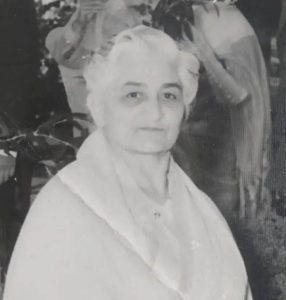
 Her Highness Maimoona Sultan (1900-1982) was a prominent figure in the royal family of Bhopal, best known as the wife of Nawab Hamidullah Khan, the last ruling Nawab of the princely state. A woman of royal lineage and literary talent, she was a noteworthy personality within a dynasty famous for its succession of female rulers.
Born in 1900, Maimoona Sultan was of high nobility, being the great-great-granddaughter of Shah Shuja Durrani, the former King of Afghanistan. In September 1905, she married Hamidullah Khan, who would ascend to the throne of Bhopal in 1926. As the Begum of Bhopal, she was the consort to the ruler and held a position of significant social standing. Together, she and the Nawab had three daughters: Abida, Sajida, and Rabia Sultan.
As the Begum, Maimoona Sultan was part of the vibrant cultural and social milieu of the Bhopal court. She was a member of the Princess of Wales’s Ladies Club, indicating her participation in the social activities appropriate for a woman of her rank during that era.
Literary Contribution: “A Trip to Europe”
Maimoona Sultan holds a unique place in literary history as the author of a travelogue titled A Trip to Europe. This work was originally published under the name Shahbano Begum and was penned when she was just a teenager. The book chronicles her journey to England in 1911, which she undertook with her formidable mother-in-law, the ruling Begum Sultan Jahan, to attend the coronation of King George V.
Her account is a significant piece of early 20th-century travel writing by a Muslim woman from the Indian subcontinent. It offers a rare glimpse into the experiences and observations of a young royal lady encountering the West. Constrained by the practice of purdah (seclusion), her narrative is shaped by her unique position, often relying on the accounts of her mother-in-law and newspaper reports to describe events she could not witness directly. The style of the book reflects a formal, Victorian influence, yet it provides valuable insights into the cultural exchange of the time. The travelogue discusses the perceived religious laxity in Turkey, the importance of education for women, and a fascination with Western advancements, all from the perspective of a young, devout Muslim noblewoman.
Family and the End of an Era
Maimoona Sultan’s life spanned a period of immense change for the princely states of India. Her husband, Nawab Hamidullah Khan, navigated the complex political landscape leading up to India’s independence and ultimately signed the Instrument of Accession to merge Bhopal with the Dominion of India in 1949.
The succession of the Bhopal throne after the Nawab’s death in 1960 was a notable family event. Their eldest daughter and heir apparent, Abida Sultan, had migrated to the newly formed nation of Pakistan in 1950. Consequently, she relinquished her claim to the title. The title of titular ruler of Bhopal then passed to Maimoona Sultan’s second daughter, Sajida Sultan. Through Sajida’s marriage to Iftikhar Ali Khan Pataudi, the royal houses of Bhopal and Pataudi were united. Maimoona Sultan is the maternal grandmother of the famed cricketer Mansoor Ali Khan Pataudi and the great-grandmother of actors Saif Ali Khan and Soha Ali Khan.
Maimoona Sultan continued to live in Bhopal after the end of its status as a princely state. She passed away in 1982 and is buried in the Bada Bagh cemetery in Bhopal, leaving behind a legacy as a literary voice from a bygone era and the matriarch of a family that continues to hold a significant place in India’s cultural landscape.