
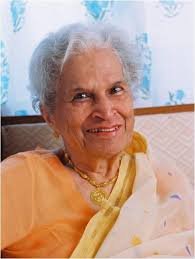
 Kamila Tyabji (1918–2004) was a trailblazing barrister and philanthropist whose life bridged the legal corridors of London and the grassroots development of India. Born into a distinguished Bombay family—her grandfather, Badruddin Tyabji, was the third president of the Indian National Congress—Kamila was raised in a tradition of public service and intellectual rigour.
Kamila studied Philosophy, Politics, and Economics at St Hugh’s College, Oxford, where she was a contemporary of Indira Gandhi. She became one of the first Muslim women to attend the university, later earning a Bachelor of Civil Law. Called to the Bar at Middle Temple in 1943, she practised insurance law in London for over twenty years. During this time, she became a singular figure in the English courts, often appearing in vibrant silk saris. Her career was marked by historic “firsts”: she was the first woman to argue a case before the Privy Council and, for a period, was the only woman barrister practising in London.
Tyabji’s influence extended beyond the courtroom. Between 1953 and 1956, she co-hosted the BBC’s Asian Club, providing a vital cultural voice for the UK’s Asian community. On the global stage, she served as India’s representative to the United Nations Commission on the Status of Women, where she drafted key declarations on gender equality and fought to close educational gaps between boys and girls. In 1960, she founded the Women’s Indian Association of the United Kingdom.
A pivotal shift occurred in the mid-1960s when Kamila abandoned her successful London practice to return to India. Moved by the devastation of the Bihar famine, she joined relief efforts alongside activist Jayaprakash Narayan. Her experience with the “bumbling male planning” of the bureaucracy convinced her that true progress required the direct economic empowerment of women.
The Women’s India Trust (WIT)
In 1968, with a modest seed capital of Rs 10,000, she founded the Women’s India Trust (WIT) in Bombay. What began as a small sewing project grew into a massive vocational network. In 1983, she established the Kamila Tyabji WIT Centre in Panvel, offering training in:
-
Vocational Skills: Tailoring, printing, and food processing.
-
Professional Education: Nursing and early childhood development.
-
Global Export: Producing high-quality jams, chutneys, and linens for domestic and international markets.
To support this mission, she founded the Kamila Trust in the UK and opened “Kashi,” a London shop dedicated to selling WIT products.
Kamila remained a serious legal scholar throughout her life. Her published works, including Limited Interests in Muhammadan Law (1949) and writings on polygamy and divorce, provided a critical analysis of women’s status under Indian Muslim law. Posthumously awarded the KarmaVeer Puraskaar in 2014, Kamila Tyabji’s most enduring monument remains the Women’s India Trust, which continues to provide financial independence and dignity to thousands of women across Maharashtra today.