
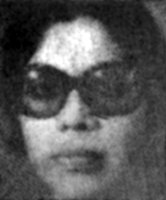
 Laila Samad, born on April 3, 1928, in Kolkata, West Bengal, emerged as a multifaceted pioneer in Bengali journalism, literature, and theatre. Her life’s work bridged the cultural and social history of colonial Bengal with that of independent Bangladesh. Born into a distinguished Bengali Muslim family, her father, Khan Bahadur Aminul Haque, was a well-respected government official, a title that underscored her family’s high social standing.
Samad’s early education began at Kolkata’s Nari Shikshika Mandir and Sakhawat Memorial School. She later pursued higher education at Ashutosh College and Lady Brabourne College. Her academic journey culminated in a Master of Arts in journalism from the University of Calcutta in 1959, where she graduated with a first-class first division. This exceptional achievement laid a solid foundation for her future career. In 1946, she married her cousin, Mirza Abdus Samad, a notable Communist Party worker. This union connected her to influential leftist intellectual circles and led to her permanent relocation to Dhaka, which would become the heart of her professional life.
Samad’s journalism career took off in 1950 when she joined the weekly Begum, a pioneering women’s magazine. She went on to work for several other prominent publications, including Daily Sangbad, Weekly Chitrali, Purbadesh, and Dainik Bangla. Her leadership skills were evident in her roles as editor of the monthly women’s magazine Ananya from 1954 to 1958 and the fortnightly Bichitra in 1970.
Beyond journalism, Samad was a prolific literary figure. Her contributions to Bengali literature are showcased in her short story collections, such as Kuyashar Nadi (1965), Duhsvapner Andhakare (1975), and Aranye Naksatrer Alo(1975). Her literary works also included the drama Bichitra (1960), the travelogue Juktarastrer Din (1985), and Sola Desher Sola Kahini (1979), a collection of juvenile stories. Her personal diaries from 1971, Karcha ’71, offer a unique perspective on the year of Bangladesh’s independence.
A trailblazer in Bengali theatre, Samad was one of the few Muslim women to grace the stage in the 1950s. She debuted in the play Jabanbandi in 1951 and acted in other productions like Chhenratar and Kafer. She also acted in radio plays and directed and produced several notable plays, including Buda Saliker Ghade Roun, Red Lantern O White Haired Girl, and Ma. Her commitment to the arts extended to founding cultural institutions like the Charoni Drama Group and the Dhaka Cine Club.
Samad was also actively involved in the Bengali Language Movement of 1952. She delivered speeches at meetings to encourage women’s participation in the crucial political and cultural struggle. Her significant contributions to journalism and literature earned her numerous accolades, including the Bangla Academy Award in 1982, the Lekhika Sangha Award in 1977, and the Nurunnesa Khatun Vidyavinodini Gold Medal.
Laila Samad passed away on August 10, 1989, at the age of 61. Her rich legacy continues to inspire, with the Dhaka Ladies Club establishing the Laila Samad Award in her honour. She is remembered as a pioneering journalist, writer, actress, and cultural activist whose work broke social barriers and enriched the intellectual and cultural life of Bengal and Bangladesh.