
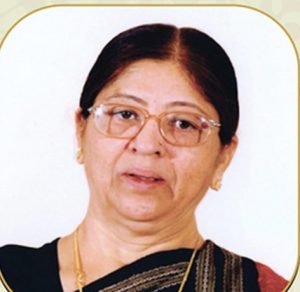
 Meherunnisa Parvez is a distinguished and influential voice in contemporary Hindi literature, celebrated for her realistic and empathetic portrayal of social issues, particularly those affecting women and marginalised communities. Her significant contributions to literature have been recognised with the prestigious Padma Shri, one of India’s highest civilian honours.
Born in Belaganj, Bihar, Parvez’s unique life experiences profoundly shaped her literary perspective. Her marriage to Bhimsen Parvez, a renowned Urdu writer, was an inter-religious and inter-caste union. The social obstacles and boycotts they initially faced provided her with a deep, firsthand understanding of societal prejudices. This experience became a powerful wellspring for her writing, allowing her to craft characters and narratives that realistically explore the complexities of identity, social norms, and interfaith relationships. Her upbringing in a rural environment, followed by life in the city, provided her with a nuanced view of both worlds —a duality that frequently emerges in her work.
Parvez’s literary career spans several decades, encompassing a rich collection of novels, short stories, and travelogues. She made her debut with the well-received novel “Aankhon Ki Dehleej” (1969). Her reputation was solidified with subsequent works, such as “Korja” (1977), which earned her the Madhya Pradesh Sahitya Academy Award, and “Akela Palash” (1981), a poignant exploration of a single woman’s fight for independence. Her novel “Samar” (1996) was widely acclaimed and translated into multiple languages, further cementing her status as a major writer. Her short story collections, such as “Adam Aur Hawwa” and “Galat Purush,” delve into the intricate dynamics of gender and relationships with profound insight.
The hallmark of Parvez’s writing is its stark realism. She masterfully portrays the lives of ordinary people, creating characters who are flawed, vulnerable, and deeply relatable. Her work serves as powerful social commentary, unflinchingly addressing issues of poverty, caste discrimination, and gender inequality.
A central and recurring theme is the exploration of the female experience. She captures the struggles, aspirations, and resilience of women from diverse backgrounds with authenticity and compassion. Her writing style is simple, direct, and accessible, yet it carries immense emotional weight. By avoiding ornate language, she allows the power of her stories and the psychological depth of her characters to resonate strongly with readers. Meherunnisa Parvez remains a vital force in Hindi literature, using her powerful, thought-provoking narratives to advocate for social change and inspire a new generation of writers.