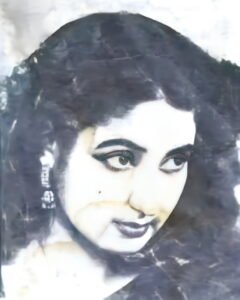
 Nazar Sajjad Hyder (1892–1967), often spelt Nazr Sajjad Hyder, occupies a seminal position in the history of Urdu literature and the social reformation of Muslim women in colonial India. Born Nazr Zehra in 1892 in Sialkot, Punjab, she emerged from the secluded world of the elite Shia ashraf household to become a vocal participant in the burgeoning public sphere of the early twentieth century. As a novelist, journalist, educator, and freedom activist, she successfully navigated the delicate transition between traditional zenana life and the modern demands of nationalist politics and women’s rights. While often remembered today as the mother of the celebrated novelist Qurratulain Hyder and the wife of the writer Syed Sajjad Hyder “Yildirim,” Nazr was a formidable intellectual force in her own right, challenging patriarchal norms through both her pen and her praxis.
Early Life and Intellectual Foundations
Nazr’s journey began in an environment that was unusually conducive to female intellectualism. Her father, Sayyid Muhammad Nazr-ul Baqar, a military officer, defied the conservative conventions of his time by fostering his daughter’s education. Although her mother, Mustafai Begum, passed away when Nazr was a teenager, her upbringing remained grounded in a family culture that valued literacy. Following her mother’s death, she was raised by her aunt, Murtazai Begum, ensuring a continuity of support.
However, her most profound literary influence was another paternal aunt, Akbari Begum. Akbari was the author of the 1907 reformist novel Godar ka Lal (The Ruby in Rags), a work that emphasised female education. Growing up with a published female author in the family normalised the concept of the “woman writer” for Nazr, allowing her to envision a public voice for herself from within the confines of purdah. While her formal education was conducted at home—standard for sharif girls—it was rigorous, encompassing Urdu literature and English instruction by a governess. Furthermore, her family’s connections to reformist circles, particularly Syed Mumtaz Ali of the journal Tahzib-e Niswan, exposed her to critical debates regarding Islamic modernism and women’s rights from a young age.
Journalism and Literary Partnership
Nazr’s professional entry into literature was precocious. In 1909, while still living in strict purdah, she was appointed editor of Phool, a pioneering Urdu children’s magazine. Under her editorship, the magazine became a vital tool for the moral and intellectual development of children across North India. Simultaneously, she began contributing to major women’s journals like Tahzib-e Niswan and Ismat. Writing initially under the pen name “Bint Nazr-ul Baqar,” she earned the affectionate title “Tahzibi Behan” (the cultured sister). Her essays masterfully blended a reformist agenda—advocating for girls’ schooling and companionate marriage—with a tone of religious respectability, making her radical ideas palatable to conservative audiences.
In 1912, her marriage to Syed Sajjad Hyder Yildirim marked the beginning of a dynamic intellectual partnership. Yildirim, an Aligarh-educated civil servant and writer, was a staunch supporter of women’s emancipation. Their union created a vibrant domestic atmosphere that nurtured Nazr’s activism and later shaped the historical sensibilities of their daughter, Qurratulain.
Fiction as Social Critique
Nazr Sajjad Hyder utilised fiction as a vehicle for trenchant social critique, focusing on the interior lives of women. Her early novel, Khairu’n-Nisa Begam, established her focus on the constraints placed upon women. In Ah-e Mazluman (The Sighs of the Oppressed), she launched a powerful attack on polygamy, distinctive for its focus on emotional trauma rather than economic impracticality. She argued that an Islamic home could not function ethically if built upon the psychological devastation of a first wife.
Her 1925 novel, Akhtarunnisa Begum, presented a bildungsroman featuring a resourceful, educated heroine who navigates family politics with agency, implicitly arguing that female education is essential for domestic management. Furthermore, in Jaanbaz (The Brave), written during the height of the Non-Cooperation Movement, she linked the domestic sphere to national politics. Her characters’ rejection of foreign goods in favour of indigenous products illustrated how housewives could actively participate in the anti-colonial struggle through consumer choices. Across her oeuvre, including works like Surayya and Najma, she blended sentimental melodrama with pointed critiques of forced marriage and economic vulnerability, making complex social issues accessible to a broad female readership.
Activism, Education, and Nationalism
Nazr’s commitment to reform extended beyond the written word. Upon moving to Dehradun with her husband, she was struck by the disparity between educational opportunities for Hindu and Muslim girls. In response, she spearheaded the establishment of a school for Muslim girls in Dehradun, undertaking the difficult task of persuading conservative families to enrol their daughters. She also lent significant support to the Muslim Girls’ College in Aligarh and the Karamat Hussain Muslim Girls College in Lucknow, playing a pivotal role in expanding female education in North India.
Her personal stance on purdah evolved in tandem with her activism. In 1923, she took the radical step of discarding the veil entirely. This act, bold within the conservative United Provinces, signalled her transition from a cautious reformer to a revolutionary figure. Politically, she was deeply aligned with the freedom movement, adopting khadi, supporting the Khilafat cause, and using her platform to rally women against British rule.
Legacy
From the 1940s, Nazr chronicled her life in diaries and memoirs, later compiled as Guzashta Barson ki Baraf (The Snows of Past Years). This volume remains an invaluable social history of Muslim society in transition. Nazr Sajjad Hyder died in 1967, having witnessed the independence of India and the partition of the subcontinent. While she lacked major state honours during her lifetime, her legacy is foundational. She not only built institutions and shifted cultural attitudes but also proved that Muslim women were active agents in shaping the intellectual and political horizons of twentieth-century India. Her life’s work serves as a bridge between the traditional and the modern, linking domestic reform to the broader struggle for national liberation.