
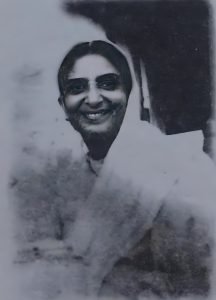
 Qaisari Begum (1888–1977) was a significant Indian writer, social activist, and chronicler of early 20th-century life, celebrated for her posthumously published autobiography,
 Kitab-i Zindagi (The Book of My Life). As the granddaughter of the pioneering Urdu novelist Deputy Nazir Ahmad Dehlvi, she was born into one of Delhi’s most prominent literary families, a heritage that profoundly influenced her life and work.
Raised within the traditional purdah system, Qaisari Begum received an extensive education at home in Urdu, Persian, and religious texts. Her life challenges the simplistic notion that seclusion equates to a lack of intellectual engagement. While the name of her husband is not recorded in available sources, she had a daughter, Muhammadi Begum, and a granddaughter, Zehra Masroor Ahmad, who later edited and published her autobiography. It is important to note that she is often mistakenly identified as the wife of Pakistani Prime Minister Khwaja Nazimuddin, but this is historically inaccurate.
Her most enduring legacy is Kitab-i Zindagi. Written in the 1930s but not published until 1996, this memoir is a rare and intimate account of life inside the zenana (women’s quarters) of an elite Muslim family. It details the customs, education, and social fabric of a world in transition, offering a unique perspective on the domestic sphere during the British Raj. The work is a vital historical document, providing a voice to women whose experiences were seldom recorded.
Beyond her autobiography, Qaisari Begum’s commitment to cultural preservation is evident in her other, unpublished manuscripts. These include vast collections of traditional proverbs and lullabies, a book of recipes and home remedies, and a travelogue of her 1937 Hajj pilgrimage. This body of work underscores her role as a custodian of cultural knowledge, particularly that passed down through female lineage.
Qaisari Begum was also an active participant in the wider social and political movements of her era. In 1928, she attended the All India Women’s Conference in Delhi as a delegate, demonstrating her engagement with the national women’s rights movement. Furthermore, her involvement with the women’s subcommittees of the All-India Muslim League places her within the key political currents that shaped the future of the subcontinent.
Qaisari Begum’s life and writings serve as a bridge between the traditional world of the sharif elite and the emerging public role of women in India. She was not only an observer of history but an active participant, whose legacy is preserved in her invaluable writings, which grant modern readers an authentic glimpse into a bygone era from a woman’s perspective.