
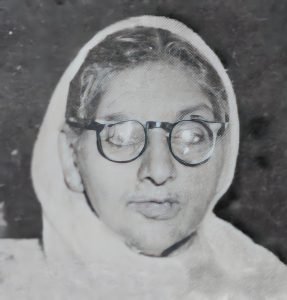
 Saadat Bano Kitchlu (Kitchlew) (1893–1970) was a formidable intellectual, a pioneering feminist voice, a prolific writer, and a dedicated nationalist who played a significant, though often overlooked, role in India’s freedom movement. While frequently identified as the wife of the celebrated freedom fighter Dr. Saifuddin Kitchlew, Saadat Bano was a prominent activist and thinker in her own right, making significant contributions to the fields of women’s emancipation, social work, and the struggle for independence.
Born in 1893 in Amritsar, Punjab, Saadat Bano hailed from a family with a rich literary and intellectual heritage. Her father, Hafizullah, was an employee of the postal department with a deep appreciation for literature. This environment nurtured her intellectual curiosity from a young age. She received her early education at home, mastering Urdu, Persian, and Arabic, and displayed a remarkable talent for writing, becoming a published author in her teens.
In 1915, she married Dr. Saifuddin Kitchlew, a Cambridge-educated barrister who had returned to India committed to the nationalist cause. Their union was a partnership of shared ideals and mutual support. Saadat Bano became Dr. Kitchlew’s steadfast supporter, managing the household during his frequent and lengthy imprisonments and raising their five children, while simultaneously cultivating her own identity as an activist and writer.
Saadat Bano’s activism was not confined to the domestic sphere; she was a courageous participant in the freedom struggle. Her most notable moment came during the anti-Rowlatt Act agitations in Amritsar in 1919. As a powerful and respected orator, she was scheduled to address a public gathering at Jallianwala Bagh on April 13, 1919, to protest the arrest of her husband and Dr. Satyapal. The British authorities, recognising her influence, issued a specific order forbidding her from speaking, fearing her words would further galvanise the public. This act of suppression underscores her prominence as a leader in the movement. The subsequent massacre that took place at the venue became a turning point in the freedom struggle.
Throughout her life, she remained deeply involved in nationalist activities. She organised women’s protest marches, addressed public meetings, and promoted the use of Khadi (hand-spun cloth). During Dr. Kitchlew’s incarcerations, she not only managed the family’s precarious finances but also served as a crucial link between him and other nationalist leaders, ensuring the continued momentum of the movement.
Saadat Bano was a passionate advocate for women’s rights and education at a time when these subjects were revolutionary. She believed that the true freedom of India was incomplete without the emancipation of its women. Her most significant contribution in this field was her series of articles titled ‘Hurriyat-e-Niswaan‘ (Women’s Freedom), which argued powerfully for social, economic, and intellectual independence for women.
Her work went beyond writing. She was an active member of the All India Women’s Conference (AIWC), a key organisation advocating for women’s rights and educational reform. Through this platform, she worked to improve educational opportunities for girls and challenge oppressive social customs. While specific details of educational institutions she may have founded are not widely documented, her intellectual contributions and tireless advocacy laid the groundwork for future generations of women. She was also involved in peace movements later in her life, attending the Peace Conference in Stockholm with her husband.
Saadat Bano Kitchlu was a respected literary figure in the Urdu world. Her writing career began before her marriage and continued throughout her life. She was a regular contributor to leading literary and women’s journals of her time, including: Tehzeeb-e-Niswaan (Lahore), Khatoon (Aligarh) and Deccan Review (Deccan).
Her articles often tackled bold themes of women’s liberation, social reform, and nationalism, establishing her as one of the leading female thinkers of early 20th-century India.
Like many women of the freedom struggle, Saadat Bano Kitchlu’s contributions were immense but largely unheralded, overshadowed by the focus on her more famous husband. Her true honour lies in her legacy as a fearless writer, a dedicated nationalist, and a pioneering feminist whose work and sacrifices paved the way for a more independent and equitable India.