
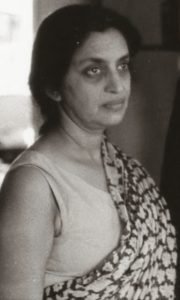
 Salma Siddiqui (1930/31 – 13 February 2017) was a notable Indian Urdu writer and a key personality within the influential Progressive Writers’ Movement. While her body of published work is modest, her significance lies in her role as a vital cultural chronicler and one of the last links to a defining era of Indian literature.
Born in Varanasi, Siddiqui grew up in the highly intellectual environment of Aligarh. Her father was the distinguished academic and satirist Rashid Ahmad Siddiqi, whose home was a nexus for literary giants like E. M. Forster and prominent Indian figures such as Dr. Zakir Husain and K. A. Abbas. This upbringing profoundly shaped her literary and social consciousness. She completed her master’s in Urdu from Aligarh Muslim University and briefly taught at its Women’s College.
Siddiqui’s life became inextricably linked with the Progressive Writers’ Movement, a literary crusade for social reform that flourished in mid-20th-century India. In 1957, she married Krishan Chander, a leading figure of the movement. Their home in Bombay (now Mumbai) became a celebrated salon for the city’s writers, poets, and thinkers, cementing their status as the “first couple” of Urdu literature. As an active participant, Siddiqui was a respected voice in the progressive intellectual circles of her time.
Her most celebrated literary contribution is the novel Sikandarnama. Based on the life of a long-serving family retainer, the work is lauded for its wit, charm, and humane portrayal of its protagonist’s unconventional wisdom. The book’s popularity led to a successful television adaptation on Doordarshan. Her other publications include Gilhari ki Behen (The Squirrel’s Sister), Bharosa (Trust), and Mangal Sutra. Tragically, a number of her completed manuscripts, including parts of her autobiography, were lost in a flood, a devastating event that is believed to have curtailed her publishing career.
After Krishan Chander passed away in 1977, Salma Siddiqui remained in Mumbai, revered as one of the last representatives of the “Bombay progressive” literary set. She was a living repository of the cultural history of Aligarh and Bombay, known for her sharp intellect and engaging presence. While there are no records of her receiving major awards, her enduring legacy is secured by her insightful writing and her crucial role in nurturing and chronicling a vibrant and transformative period in India’s literary history. Her granddaughter, Kausar Munir, continues the family’s artistic tradition as a prominent lyricist in contemporary Indian cinema.