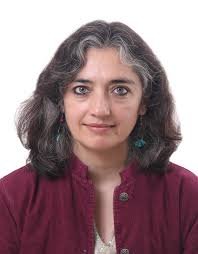
 Samina Mishra is a distinguished Indian documentary filmmaker, writer, and educator based in New Delhi, known for her focus on themes of childhood, identity, and education. Her work, primarily aimed at or about children, delves into the social and cultural fabric of India, particularly from the perspective of minority communities.
In documentary filmmaking, Mishra has earned acclaim for her personal and introspective approach. Her film The House on Gulmohar Avenue (2005) is a significant work that explores her own family’s history and Muslim identity in Delhi’s Okhla neighbourhood. Other notable films, such as Stories of Girlhood (2001), Two Lives (2007), and Happiness Class (2021), further explore issues of citizenship, prejudice, and education. These films contribute to important national conversations by highlighting the nuanced experiences of growing up in a complex society.
Beyond cinema, Mishra is a prolific writer of children’s literature. Her books, published by major Indian houses, address challenging social realities in an accessible way for young readers. Titles such as Jamlo Walks, which depicts the migrant crisis during the COVID-19 lockdown, and Nida Finds a Way, set against the backdrop of protests, are praised for their relevance and sensitivity. Other works, such as Roop and the River Crossing and Hina in the Old City, explore themes of Partition and cultural heritage.
Her family background, while mostly private, informs much of her creative output. Born to a Hindu father who converted to Islam and a Muslim mother, Mishra’s mixed-heritage upbringing offers a unique perspective on her explorations of identity. The House on Gulmohar Avenue reveals that her family settled in Okhla in 1935. This personal history, including anecdotes about her family and her own experiences as a Muslim woman married to a Hindu man, is woven into her work to illustrate broader themes of belonging and prejudice in India.
As an educator and arts advocate, Mishra founded The Magic Key Centre for the Arts and Childhood, a virtual resource hub promoting arts-integrated education. She has led interdisciplinary research projects, such as Hum Hindustani, which focuses on children and citizenship, and has taught filmmaking at institutions like Jamia Millia Islamia. Her expertise is further recognised through her role on juries for prestigious children’s book awards.
Mishra has received several honours for her multidisciplinary contributions. She was awarded the Sea Change Residency by the Gaea Foundation in 2010 for her work across multiple media, including writing and education. In 2022, her book Jamlo Walks won the Neev Book Award for Emerging Readers, cementing her status as a vital voice in Indian children’s literature and documentary film.