
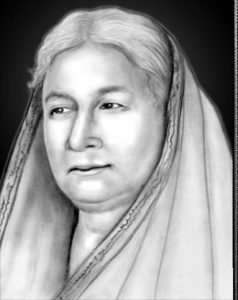
 Syed Fakrul Hajiya Hassan (1870-1970), more commonly known as Begum Amir Hasan or Fakhrul Hajia Begum, was a prominent but often overlooked freedom fighter from the princely state of Hyderabad. Her remarkable life spanned a century, during which she played a pivotal role in India’s independence movement, leveraging her social standing to challenge colonial rule and earning the deep respect of the nation’s foremost leaders.
Born in 1870 to Persian parents who had moved from Bombay to Hyderabad, Fakhrul Hajiya thoroughly embraced the syncretic culture of her new home, becoming completely Indianized. Through an unusual arrangement initiated by her school classmates, she became the third wife of their widowed father, Talukdar Amir Hasan, a senior official in the Hyderabad government. Together, they raised fourteen children, whom she instilled with strong nationalist values and anti-colonial sentiments.
Fakhrul Hajiya Begum’s journey into activism was significantly influenced by her close friendship with the renowned poet and freedom fighter, Sarojini Naidu. Her deep opposition to colonial rule was evident in her decision to educate her children in Germany rather than in British institutions. She became an active participant in both the Khilafat and Non-Cooperation Movements led by Mahatma Gandhi, demonstrating her commitment to national unity and independence.
Her most iconic act of defiance occurred in 1925. Responding to Gandhi’s call to boycott foreign goods, she organised a large public bonfire of imported items at her home, ‘Abid Manzil’. This courageous event was a direct challenge to British authority, as it took place yards away from the British Resident’s home on Bank Street, in the heart of the Nizam’s territory. This act cemented her reputation as a staunch and fearless nationalist.
Her wisdom, dedication, and maternal support for the cause earned her the affectionate title “Amma Jan” (Respected Mother) from India’s most distinguished leaders, including Mahatma Gandhi, Jawaharlal Nehru, and Subhas Chandra Bose. Her home became a renowned sanctuary and a strategic hub for freedom fighters, providing material support and a safe space for planning independence activities. She was also a fervent supporter of Netaji Subhas Chandra Bose’s Indian National Army (INA) and actively campaigned for the release of its imprisoned soldiers. When her own son was arrested after the Red Fort Trials, she was instrumental in securing his release by appealing to senior Congress leaders.
Perhaps Fakhrul Hajiya Begum’s most enduring legacy was her success in inspiring her children to join the freedom struggle. Her sons, collectively known as the “Hyderabad Hassan Brothers,” made significant contributions to the nation. Her most famous son, Abid Hasan Safrani, became a close aide to Netaji Subhas Chandra Bose and is credited with coining the timeless slogan “Jai Hind.” Her other sons, Badrul Hasan and Jafar Hassan, were devoted followers of Mahatma Gandhi.
Syed Fakrul Hajiya Hassan remains a powerful example of the silent, selfless, and unwavering spirit of the countless women whose courage and sacrifices paved the way for India’s freedom.