
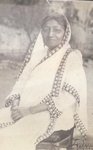
 Begum Sakina Luqmani (1871-1960) was a pioneering figure in India’s nationalist movement and a lifelong champion of women’s welfare. Born into the illustrious Tyabji family of Bombay—one of the most progressive Muslim lineages of the colonial era—she forged a distinctive public career that spanned anti-colonial activism, Congress politics, and grassroots social reform. Her father, Badruddin Tyabji, was a foundational figure in Indian politics, serving as the first Indian barrister in Bombay and the first Muslim President of the Indian National Congress. Raised in an environment that championed women’s education and opposed the practice of purdah, Sakina translated these progressive family values into a lifetime of public service alongside her husband, the physician Dr Badruddin Abdul Qayyum Luqmani.
Leadership in the Freedom Struggle
Sakina was an early and resolute participant in the Gandhian mass movements. During the Non-Cooperation Movement (1920–22), she was arrested and classified as an ‘A’ category political prisoner. Her most documented activism occurred during the Civil Disobedience Movement of 1930. As the president of her local Congress shakha, she became a formidable force in the picketing of liquor shops. Her presence was so commanding that it was said she only had to sit under a pipal tree near a shop for customers to stay away.
This activism led to a high-profile arrest in 1930, where the 65-year-old Sakina was initially sentenced to four months of hard labour. The severity of the sentence sparked a national outcry, with the Bombay Chronicle denouncing the government’s harshness. In a show of solidarity, the Desh Sevikas (a women’s volunteer corps) organised a massive procession in her honour. Following intense public pressure, the Governor was forced to upgrade her prisoner status and reduce her term. Her stature remained immense even after independence; following Mahatma Gandhi’s assassination in 1948, it was Sakina Luqmani who led the mile-long women’s funeral march in Bombay, carrying the national flag.
Grassroots Reform and Community Building
In parallel with her political career, Luqmani was a tireless social worker who focused on institutionalising care for women and children. After moving to Chembur during its early development, she played a central role in establishing a maternity hospital in the 1940s—an institution that remains in operation today. Her commitment to education was equally firm; she served as the longtime chairman of the advisory committee for the Bhagini Seva Mandal, where she helped establish the Bal Vikas Kendra nursery school.
By the time of her death in 1960, Sakina Luqmani had helped redefine the role of Muslim women in the Indian public sphere. Alongside contemporaries like her sister Amina Tyabji and Bi-Amma, she defied social conventions to prove that nationalist principles and grassroots civic action were inseparable. Her life’s arc stands as a testament to the depth of Muslim women’s engagement with India’s journey toward freedom and modern nation-building.