
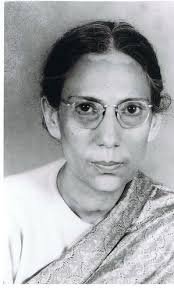
 Mumtaz Jahan Haider (1907–2003), fondly remembered as ‘Mumtaz Apa’, was a transformative figure in Indian education. For over thirty years, she served as the Principal of the Women’s College at Aligarh Muslim University (AMU), turning her parents’ pioneering vision into a premier institution for women’s higher learning. Born in Delhi to Sheikh Abdullah (‘Papa Mian’) and Wahid Jahan Begum (‘Ala Bi’), Mumtaz was raised in a household defined by intellectual rebellion and social reform. Her parents had established the Madrasa-i-Niswan in Aligarh despite intense local opposition. The Abdullah family was notable for its progressive stance; Mumtaz’s sister, Rashid Jahan, became a foundational figure in the Progressive Writers’ Movement, while her younger sister, Khurshid Mirza, became a celebrated actress. Rejecting the restrictions of purdah, the family ensured their daughters received an expansive education.
Education
Mumtaz’s academic journey was a testament to her family’s commitment to modern learning. After matriculating at Aligarh, she attended Isabella Thoburn College in Lucknow. In 1931, she earned her Bachelor’s and Master’s degrees in English from Lucknow University, becoming one of the first Muslim women of her era to achieve postgraduate qualifications. Seeking to professionalise her pedagogical skills, she travelled to England to earn a Bachelor of Education from the University of Leeds. Upon returning to India in 1937, she briefly taught at the family school before beginning her long tenure as a leader. Her personal life was marked by both resilience and tragedy; married to Professor Hayder Khan in 1935, she was widowed in 1948 and raised their two children as a single mother. Her children went on to achieve national distinction: her daughter, Shahla, in the Ministry of Information and Broadcasting, and her son, Salman Haidar, as India’s Foreign Secretary.
Women’s Emancipation
Appointed Principal in 1940, Mumtaz led the Women’s College through three decades of unprecedented growth. Under her stewardship, the college evolved from a fledgling school into a robust degree-granting institution. A critical turning point occurred in 1949 when Education Minister Maulana Abul Kalam Azad, impressed by her leadership, secured permanent government funding for the college. Mumtaz’s approach to emancipation was holistic; she introduced debates, competitive verse recitation (bait-baazi), and cultural colloquia to foster independent thinking among her students. She balanced progressive ideals with cultural sensitivity, ensuring that conservative families felt secure sending their daughters to the college while simultaneously encouraging those students to become self-sufficient leaders.
Her reformist spirit extended to religious practice. Viewing Islam as an ethical framework for justice, she advocated for women’s spiritual agency. She even designated land for a women’s mosque to provide students access to congregational prayer—a project that, while later stalled by traditionalists, reflected her radical vision for female inclusion. Mumtaz Jahan Haider passed away in 2003 at the age of ninety-six. Her legacy lives on through the thousands of women she mentored and the Mumtaz Jahan Haider Memorial Gold Medal at AMU. Her life’s work ensured that for Muslim women, modern education was no longer a distant dream, but an established right.
Societally, known as ‘Mumtaz Apa,’ she provided mentorship and support, aiding women in need, even during her battle with Parkinson’s disease. Her resilience inspired alumni and advanced social reforms in post-colonial India.
The Aligarh Muslim University established the ‘Mumtaz Jahan Haider Memorial University Gold Medal’, awarded for excellence in fields such as English Literature, in her memory since 2012.