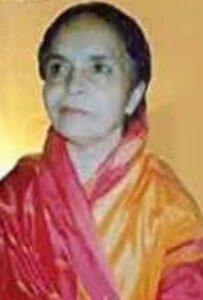
 Naseema Turabul Hasan stands as one of the most accomplished Urdu writers to emerge from Hyderabad during the late twentieth and early twenty-first centuries. A versatile intellectual, her work spans poetry, essays, biography, and literary chronicling. She has made particularly vital contributions to the specialised genres of inshaiya nigari (the light essay) and khaka nigari (pen-portraiture). Beyond her technical skill, Hasan is regarded as a primary custodian of Hyderabad’s literary and cultural heritage, preserving the nuances of the Urdu tradition for future generations.
Family and Intellectual Foundation
Born Naseema Khatoon to Aftab Hussain and Madina Begum, she was rooted in an environment that valued education and public service. She married Syed Turabul Hasan (1927–2019), a distinguished IAS officer and alumnus of Aligarh Muslim University and Osmania University, who founded the Institute of Resource Development and Social Management (IRDAS). This intellectual partnership extended to their children: Dr Qurratulain Hasan, a renowned geneticist and Fellow of the National Academy of Sciences, and Prof. Syed Najamul Hasan, a Professor of Mathematics and former Dean at Maulana Azad National Urdu University (MANUU). This family legacy of academic excellence mirrors Naseema’s own dedication to disciplined literary inquiry.
Literary Contributions and Recognition
Hasan’s published corpus includes some twelve volumes that traverse multiple genres. Her early prose collection, Batein Kahne Sunne Ki (2002), was followed by poetic works such as Nuqoosh-e-Dil (2003) and Aks-e-Faryadi. Her reputation as a prose stylist was further cemented with Zikr Us Pariwash Ka (2009) and the 2015 biographical memoir Goya Dabistan Khul Gaya.
In 2019, she released two significant works: Mir Osman Ali Khan Asif Sabe—Yadon Ki Rahguzar Par, a deep biographical study of the last Nizam of Hyderabad, and Rangbarangi Yeh Dunya. During the launch of these volumes, the celebrated satirist Mujtaba Hussain remarked that Hasan’s collective works essentially form a comprehensive history of Hyderabad. Her ability to capture the cultural essence of the Asaf Jahi period has also been lauded by scholars like Allama Ijaz Farrukh. Furthermore, her compilation of her brother’s letters in Ali Baqar Ke Khutoot added an important epistolary dimension to her body of work, showcasing her skill in preserving personal histories.
Advocacy and Academic Legacy
Hasan has been a pivotal figure in championing women’s voices in Urdu literature. She was a prominent member of Mehfil-e-Khawateen, a pioneering organisation founded in 1971 to support female writers. Alongside figures like Jeelani Bano and Qamar Jamali, she helped create a space for women to develop their craft in a historically male-dominated field. Her mastery of the inshaiya form has been the subject of specific scholarly research by Dr Bi Bi Raza Khatoon and others at MANUU.
The academic community continues to recognise her impact; in 2018, Dr Noori Khatoon published a monograph titled Naseema Turabul Hasan: Hayat, Shakhsiyat Aur Adabi Karnamay, providing a critical analysis of her life and achievements. Most recently, in January 2025, she was honoured during MANUU’s 28th Foundation Day for her lifelong contributions to Urdu culture. Ultimately, Naseema Turabul Hasan’s legacy is defined by her dual role as a creative artist and an institutional mentor, ensuring that the literary production of the Deccan remains a vibrant part of the broader Urdu canon.