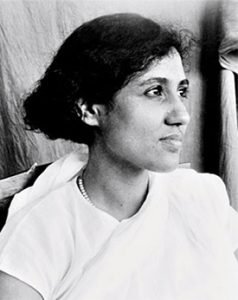
 Dr. Rashid Jahan was a trailblazing Indian writer, medical doctor, and activist whose life and work left an indelible mark on 20th-century Urdu literature and social reform. Born in Aligarh in 1905, she was a pioneering feminist voice who fearlessly used her writing to challenge the oppressive patriarchal structures of her time. Her legacy is one of courage, intellectual integrity, and a deep commitment to social justice.
Raised in a family dedicated to social reform, Jahan’s path was set early on. Her father, Sheikh Abdullah, was a leading advocate for women’s education who founded the Women’s College at Aligarh Muslim University, while her mother was a regular contributor to a literary journal promoting women’s emancipation. This progressive environment shaped Jahan’s own education; after attending the Muslim Girls’ School in Aligarh, she pursued a degree in Inter-Science and later graduated as a gynaecologist and obstetrician from Lady Hardinge Medical College in Delhi in 1929. This dual expertise in medicine and literature gave her a unique and powerful perspective on the lives of women.
Though her literary output was not extensive—comprising about two dozen short stories and several plays—its impact was immense. Jahan’s writing was bold and direct, tackling taboo subjects such as female sexuality, the distinction between public and private spaces, and the hypocrisy within religious and social institutions. She saw literature not as a mere art form but as a vital instrument for social change.
Her most famous and controversial work was Angarey (Embers), a 1932 collection of short stories she co-authored. The book’s unflinching critique of social and religious orthodoxy caused an immediate uproar. The British government banned it within months of its publication, and Jahan, as the sole female author, faced severe public backlash and threats. The ban, however, only solidified her reputation as a radical thinker. This event became a pivotal moment in Urdu literary history, directly leading to the formation of the influential Progressive Writers’ Association, of which Jahan was a founding member.
Jahan’s activism was not confined to her writing. As a doctor, she served in small towns across northern India, organising free medical clinics and literacy classes for poor women. A committed member of the Communist Party of India, she was also active in the Indian People’s Theatre Association. Her life exemplified the intersection of medicine, art, and social activism.
Described as “the rebel with a cause” and “the bad girl of Urdu literature,” Rashid Jahan passed away in 1952 but left behind a powerful legacy. She carved out a critical space for women to discuss their bodies, their rights, and their place in modern society, influencing a generation of writers and activists who followed.