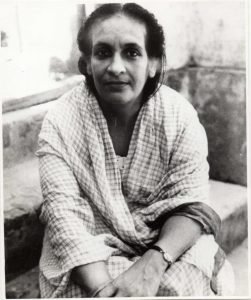
 Razia Sajjad Zaheer (1918–1979) was a distinguished Indian writer, translator, and a pivotal member of the Progressive Writers’ Association, who made significant contributions to Urdu literature. She is celebrated for her bold and realistic portrayals of female characters, whose struggles she depicted with empathy and conviction, challenging the patriarchal norms of her time.
Born Razia Dilshad in Ajmer, Rajasthan, she pursued a strong academic path, earning her degree from Isabella Thoburn College in Lucknow and later a master’s degree in Urdu literature from Allahabad University. This educational foundation informed her literary career, which began at a young age with the publication of her short stories in various literary magazines. Her writing consistently centred on pressing social issues, with a particular focus on the challenges and inequalities faced by women. She was a fervent advocate for women’s rights, and her literary works served as a powerful medium for her commitment to social justice.
As an active and influential member of the Progressive Writers’ Movement, Razia Sajjad Zaheer was at the forefront of a literary and cultural wave that aimed to infuse literature with social realism and forward-thinking values. This movement played a crucial role in shaping the political and cultural discourse of India both before and after independence, and its contributions were integral to its mission.
Her body of work is both extensive and impactful. Among her notable novels are Sar-e-Shaam (1953), Kaante (1954), and Suman (1963). She also penned poignant short-story collections, published posthumously, including Zard Gulaab (1981) and Allah De Banda Le (1984). Beyond her work for adults, she contributed to children’s literature with books like Nehru ka Bhateeja (1954).
Her personal life was deeply intertwined with her literary and political commitments. She was married to Sajjad Zaheer, a prominent Urdu writer and a founding member of the Progressive Writers’ Association. Together, they raised four children, including the renowned Indian actress Nadira Babbar and the writer Noor Zaheer, continuing a legacy of artistic and intellectual engagement.
Razia Sajjad Zaheer’s significant literary contributions were widely acclaimed, earning her prestigious honours, including the Uttar Pradesh Sahitya Akademi Award and the Soviet Land Nehru Award. Today, her writings remain highly relevant, addressing societal issues that persist. She is remembered as a powerful and unwavering voice for women and a champion of the progressive values she so passionately advocated throughout her life and work.