
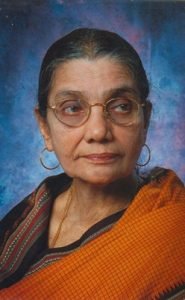
 Sara Aboobacker (1936–2023) was a pioneering Indian novelist, translator, and social activist whose work fundamentally reshaped Kannada literature by centring the voices of Muslim women from coastal Karnataka and Kerala. Born on 30 June 1936 in Kasaragod, Kerala, to a progressive advocate, Pudiyapuri Ahmad, she was one of the few girls in her era in the Beary Muslim community to receive a formal education.
Though she completed secondary school in 1953, the lack of local colleges and prevailing social restrictions prevented her from pursuing higher studies. Following her marriage to an engineer, M. Aboobacker, she settled in Mangaluru. It was during a decade of domesticity that she cultivated her literary sensibility through rigorous reading, eventually obtaining a library membership in 1963 that served as her window into the broader intellectual world.
Aboobacker’s public entry into literature occurred in 1981 via Lankesh Patrike, a weekly central to the Bandaya Sahitya (rebel literature) movement. Her first contribution was an editorial advocating for communal harmony, sparked by a cleric’s fatwa against Muslim women attending cinemas. This association with the vanguard of Kannada’s protest literature provided her with a platform to represent communities and gendered experiences that had previously been marginalised in mainstream letters.
Literary Contributions and Social Critique
Her debut novel, Chandragiriya Theeradalli (‘On the Banks of Chandragiri’), remains her most influential work. Serialised in 1981 and published as a book in 1984, it follows Nadira, a young woman whose life is dismantled by the arbitrary application of triple talaq. Drawing from the lived realities of women she knew, Aboobacker provided an unsparing critique of patriarchal structures masked as religious mandates. While the book drew significant backlash from conservative religious groups—leading to protests at the 1985 Bandaya Sahitya Sammelana—it also earned her the Karnataka Sahitya Akademi Award. Aboobacker maintained a clear distinction between criticising cultural abuses and rejecting Islam, emphasising that her goal was social reform rather than theological revision.
Her subsequent bibliography, including Sahana (1985) and Vajragalu (1988), continued to explore the intersection of gender and community. Notably, her novel Kadana Virama (1991) shifted focus to a Hindu household to critique the dowry system, illustrating her belief that female subjugation was a cross-communal crisis. From 1994, she established her own imprint, Chandragiri Prakashan, to maintain creative independence. As a translator, she brought the works of figures such as Kamala Das and the activist Hamid Dalwai into Kannada, favouring a direct, unadorned style that prioritised social relevance over literary ornamentation.
Activism and Legacy
Beyond fiction, Aboobacker was a formidable advocate for secular values and gender-equitable personal law reform, particularly during the Shah Bano case of the 1980s. She advocated for a reformed civil code that addressed discrimination without fueling communal hostility. Her activism extended to environmental issues, such as protesting the use of Endosulfan, and she served as president of the Karavali Lekhakiyara Mattu Vachakiyara Sangha.
Throughout her career, Aboobacker received numerous accolades, including the Kannada Rajyotsava Award (1995), the Nadoja Award (2006), and an honorary doctorate from Mangalore University (2008). She passed away on 10 January 2023 in Mangaluru at the age of eighty-six. Remembered as a “true critical insider,” she is celebrated for giving durable literary form to the voices of women who had long remained unheard in the Indian literary landscape.