
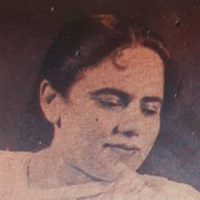
 Sayyida Akhtar Hyderabadi (1918-1973), born Sardar Begum on 9 March 1918 in Hyderabad, Deccan, was a formidable figure in the cultural and political landscape of colonial and post-colonial India. Born into a family of Nawab lineage with roots in Lucknow—her maternal grandfather held the title Azam Jung Bahadur—she was raised by her paternal uncle following her father’s death when she was four. Her education began at home with Persian and Urdu before she attended the Mahboobia School, a premier institution for Muslim girls in Hyderabad. In 1932, she married Abdul Mughni, a landlord and contractor. Although they moved to Kanpur, she adopted the epithet ‘Hyderabadi’ as a permanent mark of her cultural heritage.
Literary Evolution and the Influence of Iqbal
Akhtar’s literary journey began after her marriage. While she initially explored the romantic conventions of the Urdu lyric, her involvement with the Khaksar Movement—a nationalist organisation founded by Allama Inayatullah Khan Mashriqi—transformed her work. Her poetry shifted toward nationalistic and revolutionary themes, earning her widespread acclaim.
A defining influence on her intellectual life was the philosophy of Allama Muhammad Iqbal. This culminated in the 1948 publication of Akhtar-o-Iqbal: Tazmeen Bar Kalam-e-Iqbal, a sophisticated exercise in tazmeen (the classical practice of expanding upon an existing poem) using Iqbal’s verse as a foundation. Her other notable works include Nigarishat-e-Akhtar (1944), a prose collection addressing women’s rights and contemporary social issues, and Sitare(1946). During this period, her militant poem Naara-i-Mujahid and a specially composed election anthem for the Muslim League became iconic, circulating extensively across the Indian subcontinent.
Oratory and Political Leadership
Beyond the written word, Akhtar was a legendary orator. In 1937, at the Provincial Muslim League session in Gorakhpur, she was bestowed with the title Khatiba-i-Hind (Orator of India). She was also known as Zohra-e-Sukhan (Venus of Eloquence), a testament to the lyrical and persuasive power of her public speaking.
Her political ascent was rapid and significant. In August 1939, she was elected President of the Women’s Central Sub-Committee of the All India Muslim League, one of the highest leadership roles for women at the time. Simultaneously, Mashriqi appointed her Nazim Mahaz Jang for the United Provinces, placing her at the forefront of the Khaksar Movement’s nationalist activities.
Advocacy, Patronage, and Legacy
Akhtar’s commitment to social progress was furthered by a 1938 journey to the Far East, where she studied the social conditions of women. This international perspective deepened her resolve for domestic reform. She was also a generous patron of the arts; in 1943, she personally funded a major mushaira (poetry symposium) and literary conference in Bangalore. This event was meticulously documented in the periodical Sha’ir, serving as a record of her influence and financial independence.
Sayyida Akhtar’s historical significance lies in her ability to bridge two distinct worlds. In an era where literary pursuits and high-level political activism rarely overlapped for women, she excelled in both. Her life was characterised by a rare unity of formal poetic ambition and practical, organised leadership. She passed away on 2 October 1973 in Bangalore, leaving behind a legacy of eloquence and revolutionary spirit.