
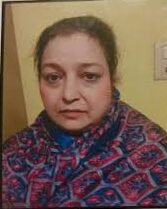
 Seema Rizvi (1966–2009), born Aisha Aizaz, was a rare figure in the public life of Uttar Pradesh, seamlessly bridging the worlds of rigorous Urdu scholarship and high-stakes electoral politics. Born into a prominent political family, she was the daughter of Aizaz Rizvi, a senior leader of the Bharatiya Janata Party (BJP) and a former state minister. This lineage provided the foundation for her dual commitment to civic responsibility and intellectual pursuit, though her own achievements were fueled by a distinct personal determination.
Academic Distinction and Linguistic Mastery
Rizvi’s academic career was marked by exceptional depth. She specialised in Urdu language and literature, achieving the rare distinction of earning both a PhD and a Doctor of Letters (DLitt). Her intellectual curiosity extended far beyond a single discipline; she attained working proficiency in Hindi, Arabic, Persian, and French, reflecting a deep engagement with the broader Persianate and South Asian heritage.
Before her formal entry into the legislature, Rizvi was already a public intellectual. She authored seventeen books and served as a newsreader for the national broadcaster, Doordarshan. Her primary professional home, however, was the University of Lucknow. As a faculty member and, eventually, the Head of the Urdu Department, she maintained her academic responsibilities alongside her political duties until her untimely death, embodying the scholar-politician.
Political Career and Ministerial Legacy
Rizvi’s entry into politics was a natural extension of her family background, yet her choice of party was symbolically significant. By aligning with the BJP—a party not traditionally seen as a primary vehicle for Muslim political representation—she became a unique and influential figure. She served two consecutive terms as a Member of the Legislative Council (MLC) in Uttar Pradesh. On the floor of the Council, she was known for applying the same analytical rigour to policy that she applied to her scholarship, particularly while championing constituent concerns within the BJP’s minority wing.
The pinnacle of her political journey occurred between May 2002 and August 2003, when she served as Minister of State (Independent Charge) for Electronics and Information Technology under Chief Minister Mayawati. Managing a portfolio critical to the state’s economic modernisation, Rizvi proved herself a capable administrator. Her position was historically notable: a Muslim woman holding independent charge in a government led by a Dalit woman, supported by the BJP. This intersection highlighted the complex and often unexpected political dynamics of Uttar Pradesh.
Throughout her life, Rizvi navigated significant social resistance. Coming from a traditional background, her decision to remain unmarried and pursue a high-profile public career was seen as an act of considerable personal resolve. Her journey ended abruptly on August 11, 2009, when she suffered a severe brain haemorrhage while seated in the Legislative Council chamber. Despite emergency surgery at the Sanjay Gandhi Post-Graduate Institute of Medical Sciences, she never regained consciousness and passed away on August 19. Her death was mourned across party lines, with leaders praising her as a soft-spoken yet diligent representative. In the years since, her absence has highlighted just how singular a presence she was in the intersection of Urdu letters and Indian governance.