
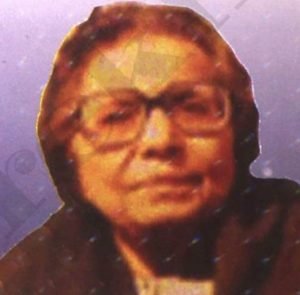
 Shakeela Akhtar (16 August 1917–9 February 1994) was a pioneering Urdu short-story writer from Bihar and one of the region’s earliest significant female voices in modern Urdu fiction. Born in Arwal, then in the Jehanabad subdivision of Gaya district, she developed a distinctive body of writing centred on women’s inner lives, social inequality, and the everyday world of Bihar. Her fiction is particularly noted for its psychological insight, regional idiom and understated realism.
Early Life and Literary Beginnings
Shakeela Akhtar grew up in an intellectually and literary-minded household. Although she did not receive conventional school or college education, books were readily available at home, and she developed an early habit of reading. Her literary imagination was also nourished by the work of established women writers such as Nazar Sajjad Hyder and Hijab Imtiaz Ali.
She began writing fiction in the 1930s, with some of her early stories appearing in the Urdu literary journal Adab-e-Latif. Her marriage to the distinguished Urdu critic and scholar Akhtar Orenvi further strengthened her engagement with literature. Their home in Patna became a gathering place for writers and intellectuals, exposing her to contemporary literary debates as she developed her own independent voice.
Her engagement with Urdu extended beyond print. From 1960 to 1962, she worked as an announcer for the Urdu programme at All India Radio, Patna, and later served on the station’s advisory committee.
Fiction Rooted in Life
Shakeela Akhtar’s short stories drew closely upon the society she knew. Her characters came not only from Muslim middle-class households but also from villages and economically marginalised communities. Women confronting unhappy marriages, childlessness, emotional isolation, poverty and social prejudice occupy a particularly important place in her fiction.
Among her collections were Darpan, Aankh Micholi, Aag Aur Pathar, Tinke Ka Sahara, Lahu ke Mol, Dain Aur Dusre Afsane and Aakhri Salam. She also compiled and edited Guzarish (1980), a volume of writings by Akhtar Orenvi.
Stories such as ‘Dain’ show her ability to blend regional life with broader questions of injustice. Drawing on the dialect, folk beliefs, and social environment of Bihar’s Son River region, the story portrays the persecution of a poor fisherwoman whom a superstitious community brands a witch. In Lahu ke Mol, economic desperation and class inequality form the basis of a disturbing examination of how much society values human life.
Psychological Realism and Literary Recognition
Rather than relying on dramatic incident or sensationalism, Shakeela Akhtar generally lets external events reveal the psychological pressures on her characters. Her compact plots, restrained narration and natural dialogue gradually expose loneliness, resentment, humiliation, fear and moral conflict. The rhythms and vocabulary of Bihari Muslim domestic and rural life give her stories a distinctive regional identity without reducing them to local colour.
Her contribution received institutional recognition. The Bihar Urdu Academy honoured her for her services to Urdu, while her book Tinke Ka Sahara received an award from the Uttar Pradesh Urdu Academy. Some of her stories, including ‘Dain’ and ‘Aankh Micholi’, were also included in educational syllabi.
Legacy
Shakeela Akhtar died in Patna on 9 February 1994 and was buried the following day at Qadian, Punjab, near Akhtar Orenvi. Her significance lies in bringing together psychological observation, women’s experience, regional language and social realism at a formative stage in Bihar’s modern Urdu fiction. As a pioneering woman short-story writer from the state, she helped expand space for women’s voices and broadened Urdu fiction’s social landscape to include villagers, labourers, and marginalised women. Later scholarship, particularly Qamar Jahan’s Shakeela Akhtar: Fard Nama (2023), has helped restore attention to a writer whose contribution occupies an important place in the history of Urdu women’s writing.
© muslimwomen.in