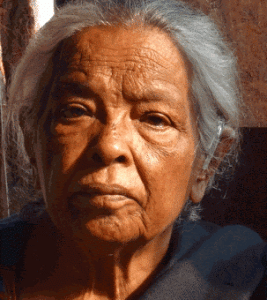
 Sughra Mehdi (1937-2014) was a preeminent Urdu intellectual whose career seamlessly integrated feminist fiction, rigorous scholarship, and grassroots activism. Best known for her critiques of the social subordination of Muslim women in India, she was also a champion of reformed Urdu prose and a co-founder of the Muslim Women’s Forum.
Early Life and Academic Foundations
Born in Bhopal as Imamat Fatimah on 8 August 1937, Mehdi moved to Delhi in 1950 under the care of her aunt, the celebrated novelist Saliha Abid Husain. This transition marked a rebirth in both name—becoming Sughra—and environment. She grew up within the reformist, secular milieu of Jamia Millia Islamia, influenced by her uncle, the philosopher Syed Abid Husain. Though initially pushed toward nursing, Mehdi eventually followed her literary instincts, earning degrees from Aligarh Women’s College and Delhi University.
She completed a doctorate at Jamia Millia Islamia under Professor Gopi Chand Narang, publishing her thesis on the poetry of Akbar Allahabadi in 1981. Her professional life was deeply rooted in Jamia; she served as an editor for the journal Islam and the Modern Age before joining the university’s Urdu Department in 1977. She eventually retired in 1997 as Professor and Head of the Department, leaving a lasting mark on the institution’s academic culture.
Literary Contributions and Feminist Themes
Mehdi’s literary journey began in childhood, but she found her voice through short stories like Atish-e Khamosh (Silent Flames). Over four decades, she produced approximately 35 books, including novels, travelogues, and biographies. Her debut novel, Pa bah Jolan (Shackled, 1972), won acclaim from the Uttar Pradesh Urdu Academy and established her hallmark style: featuring rebellious female protagonists who challenged patriarchal norms.
As a writer, Mehdi consciously rejected ornamental archaisms in favour of plain, precise Urdu prose, which she believed was more effective for social and educational reform. Her scholarly work, particularly Urdu Navalon men Aurat ki Samaji Haisiiyat (The Social Status of Women in Urdu Novels, 2002), offered a critical lens on female representation in literature. In her final years, she published Hamari Jamiah (2013), a landmark text that reclaimed the overlooked history of women’s contributions to Jamia Millia Islamia.
Activism and the Muslim Women’s Forum
Beyond the page, Mehdi was a formidable public intellectual. In 2000, she co-founded the Muslim Women’s Forum (MWF) in Delhi, alongside figures like Dr Syeda Hameed and Saeeda Khurshid. Serving as its Founder President, she utilised the forum to tackle systemic issues such as triple talaq, acid attacks, and the enforcement of purdah.
Her activism was uniquely grounded in a dual framework: a liberal interpretation of the Quran coupled with the rights guaranteed by the Indian Constitution. By bringing religious clerics and women’s advocates to the same table, she sought to bridge the gap between tradition and modern human rights. Mehdi remained a vital voice for justice and literary excellence until her death in Delhi on 17 March 2014.