
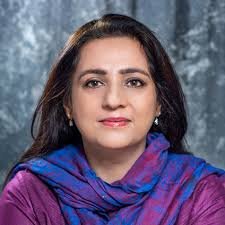
 Dr Tarana Husain Khan is an Indian author, cultural historian, and food researcher whose work centres on the oral histories, culinary traditions, and literary heritage of Rampur, a Rohilla Pathan princely state in Uttar Pradesh. She is among the foremost interpreters of Rampuri Muslim culture in contemporary English writing, seamlessly bridging historical fiction, culinary anthropology, and archival scholarship. Her deep connection to Rampur dates back to the town’s founding in 1774 by Nawab Faizullah Khan. Returning to her ancestral home in 2010, she began researching at the Rampur Raza Library. There, she discovered a collection of nineteenth-century Persian cookbook manuscripts. Despite having no prior knowledge of Persian, she translated them with the help of library faculty, a pivotal moment that defined her career.
Literary Evolution and Historical Fiction
Before shifting to historical narratives, Tarana published contemporary fiction, including I’m Not a Bimbette (2015) and its sequel Cyber Bullied (2020). Her breakthrough came with the historical novel The Begum and the Dastan(2021). Set within the gendered politics and cultural life of the Rampur court, the book won the Kalinga Literary Festival Book of the Year Award for fiction, was shortlisted for the SheThePeople Women Writer’s Award, and was longlisted for the Auther Award. The novel established her ability to use historical imagination to recover women marginalised by dominant histories. Her most recent novel, The Courtesan, Her Lover and I (2026), is a work of docu-fiction that interweaves the life of Munni Bai Hijab—a nineteenth-century courtesan-poet associated with the Urdu poet Dagh Dehlvi—with a modern narrative of a female writer navigating marriage and creative ambition. The book has solidified her reputation as one of the most distinctive English-language voices documenting North Indian Muslim culture.
Food History and Culinary Preservation
Tarana’s extensive research into gastronomy resulted in Degh to Dastarkhwan: Qissas and Recipes from Rampur(2022). The book traces Rampuri cuisine through oral history, archival records, and recovered recipes, exploring a culinary tradition shaped by Mughal, Awadhi, and Rohilla Pathan influences that declined after Indian independence. She also co-edited Forgotten Foods: Memories and Recipes from Muslim South Asia (2023), an anthology documenting endangered culinary traditions across the subcontinent.
Academic Research and Cultural Advocacy
Her academic scholarship includes the peer-reviewed article “Narrating Rampur’s Cuisine: Cookbooks, Forgotten Foods, and Culinary Memories” (Global Food History, 2023), which examines historic cookbooks alongside oral histories to map cultural identity. Between 2019 and 2023, she served as a research fellow and consultant at the University of Sheffield for an Arts and Humanities Research Council-funded project titled “Forgotten Food: Culinary Memory, Local Heritage and Lost Agricultural Varieties in India.” This initiative produced a documentary, revived endangered heirloom crop varieties like Tilak Chandan rice, and supported local khansamas (traditional cooks) whose heritage skills were fading. Dedicated to fostering local literary engagement, Tarana founded the Rampur Book Club in 2016. She currently divides her time between Rampur and Nainital.