
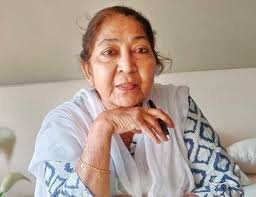
 Mumtaz Begum (1948–2021) was a versatile Kannada author, novelist, poet, and children’s writer whose literary career spanned five decades. Based in Mangaluru, she was a resident of the Belapu Military Colony and was among the earliest Muslim women to write in Kannada. Her extensive body of work, encompassing multiple genres, marks her as a significant voice in the literary culture of coastal Karnataka, despite being historically overshadowed by some of her contemporaries.
Chronological Priority and Literary Context
A notable aspect of Begum’s career is her chronological position in the history of Kannada literature. Her earliest published short stories appeared approximately seven to eight years before Sara Aboobacker’s (1936–2023). While Aboobacker is often cited as the pioneering Muslim woman writer in Kannada for the sustained breadth and impact of her foundational contributions, scholars like Dr Sabiha Bhoomigowda have highlighted Begum’s chronological priority. This distinction in literary historiography suggests that while Aboobacker remains a matrilineal figure for the movement, Begum’s early entry into the field establishes her as a vital precursor. Her versatility extended beyond Kannada; she also authored works in English, a facet of her professional life that is rarely emphasised in critical accounts.
A Prolific and Diverse Body of Work
Begum’s literary output was both considerable and diverse, reflecting a deep engagement with various narrative forms. Her published novels include Vartula, Bandalike, and Paradeshi, the latter of which was initially released in serial form. She also penned Swargakke Daari and the English-language work To the Unknown Destination. In the realm of short fiction, her collections include Avyakta, Ankura Sahita Kathe, Neenondu Mareyalada Nenapu, and Alidulida Kathegalu. Her poetic sensibilities were captured in volumes such as Sarva Ruthugalu Ninagagi and Kalana Kaiya Nakshe, while her contribution to children’s literature was solidified by the book Chimpi. Her final work, Swatantryada Kahale, was honoured posthumously, proving that her creative vitality remained intact well into her later years.
Institutional Influence and Recognition
Beyond her writing, Begum was an active participant in the organised literary life of Karnataka. She served as a member of the Karnataka Sahitya Akademi and the Karavali Lekhakiyara Mattu Vachakiyara Sangha, a regional association for women writers and readers. Her contributions earned her numerous prestigious accolades, including the Attimabbe Award, the Kittur Rani Chennamma Award, and the Jilla Rajyotsava Award. Other honours included the Chennashri Award, the Matrashri Ratnamma Heggade Book Prize, and the Basava Jyoti Award.
Mumtaz Begum passed away on April 6, 2021, at the age of 72, due to complications from COVID-19. Her death was widely condoled by political and literary figures alike, including former state minister Vinay Kumar Sorake. Following her passing, Swatantryada Kahale received the 2019 Muslim Sahitya Puraskar, signalling a renewed critical interest in her legacy. As scholars continue to re-examine the history of Muslim women’s writing in Kannada, Begum’s role as a trailblazer is increasingly receiving the recognition it deserves, cementing her status as a foundational figure in the region’s cultural history.